Drains
Drain Flashing On Office Roofs
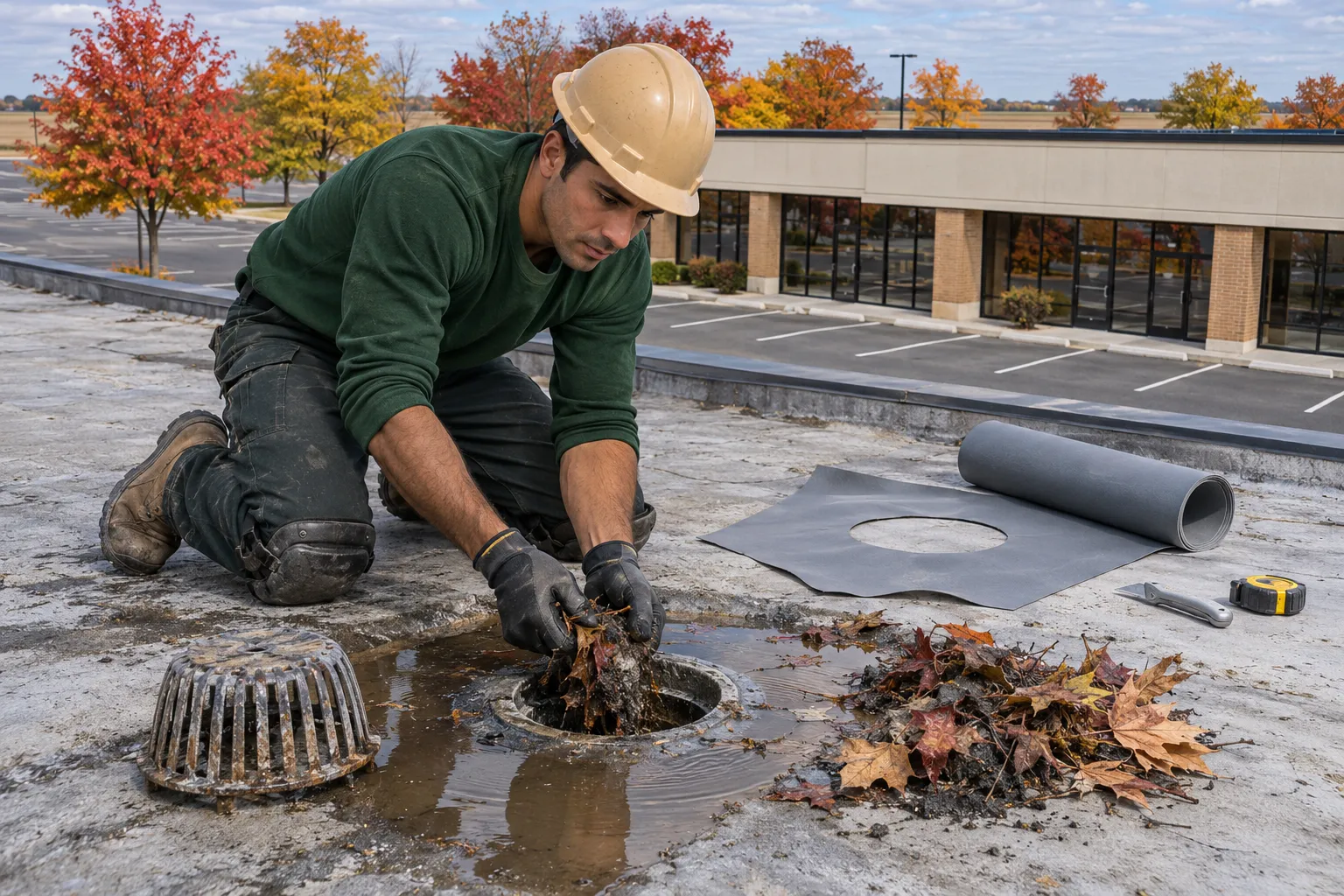
Drain flashing lifts or cracks, and water runs into the insulation before it ever shows on a ceiling. Resetting the flashing and replacing wet board ends it.
Service Area
Auburn commercial roof repair for offices and stores is planned around open hours, with tenants told which areas the work affects.
Auburn commercial roof repair on occupied buildings works best when tenants know the plan ahead of time.
Offices and storefronts stay open during most repairs. What changes is timing: noisy work, adhesive odors near air intakes, and roof hatches over sales floors get scheduled for early hours or closed days. Quiet work, such as walking the roof and taking readings, goes on during open hours without anyone below noticing.
Tenants get a short notice naming the area, the hours, and any space under the work that should stay clear. A manager gets a call when the crew arrives and again when the roof is closed up.
Offices and retail roofs in town show these six conditions most often.
Drain flashing lifts or cracks, and water runs into the insulation before it ever shows on a ceiling. Resetting the flashing and replacing wet board ends it.
Blistered built-up areas crack in summer heat and let rain into the plies below. Cutting, drying, and capping each blister stops the spread.
Loose edge strips along storefronts let wind lift the membrane and drip water over entrances. Refastened and sealed edge strips keep the water in the gutter.
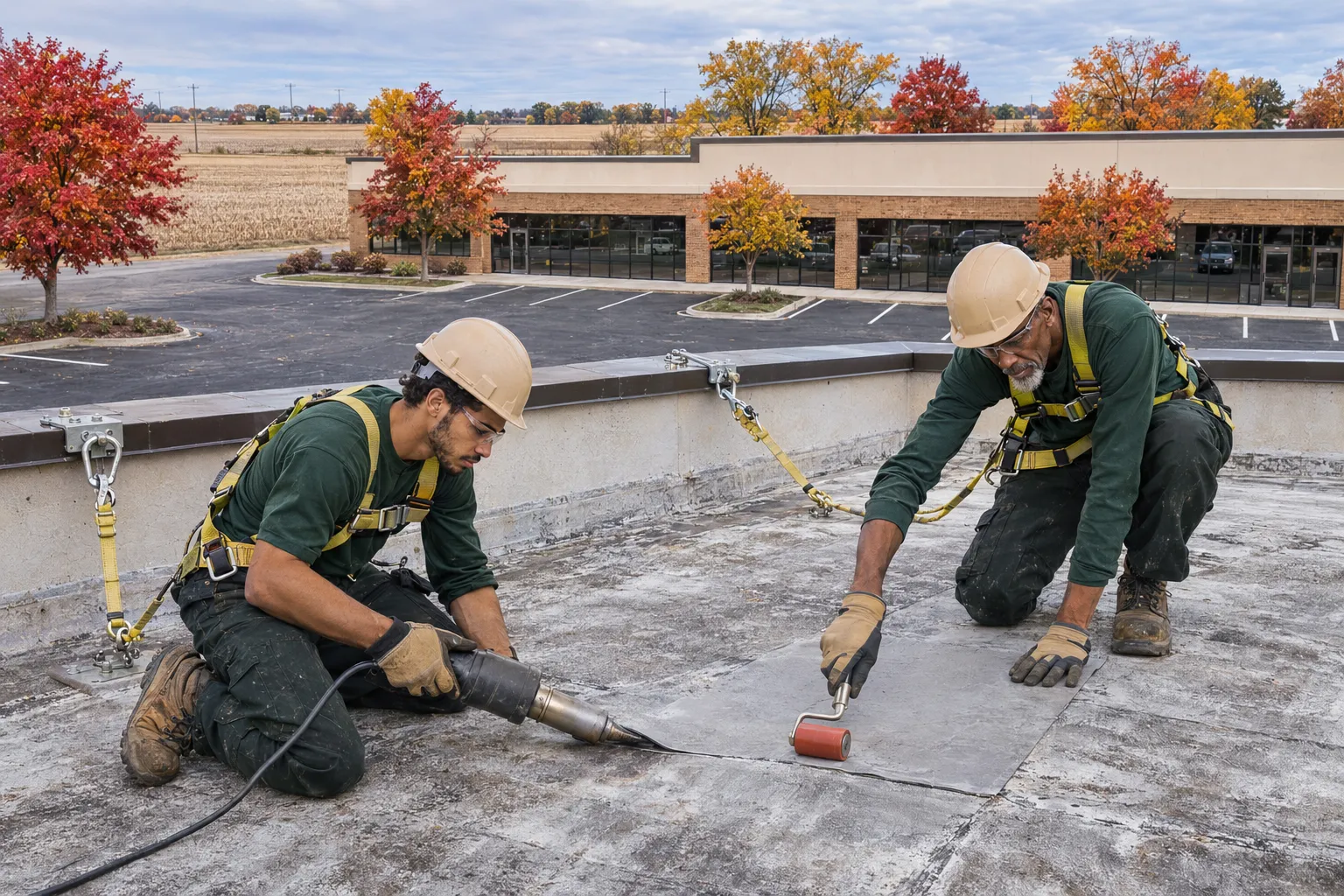
Seams near rooftop units open first, where service crews kneel and walk. Rewelding or retaping the seam closes it again.
Ceiling tiles show water days after a storm, once insulation above them is full.
Rubber boots around plumbing vents crack in the sun and leak into restrooms below.
A repair on an occupied building finishes with the roof closed and the tenants barely aware it happened.
Before The Repair
After The Repair
Every service reaches Auburn. Offices and stores call most often for flat roof and leak repairs.
Drains, seams, and blisters on TPO, EPDM, and built-up roofs.
Flat Roof Repair details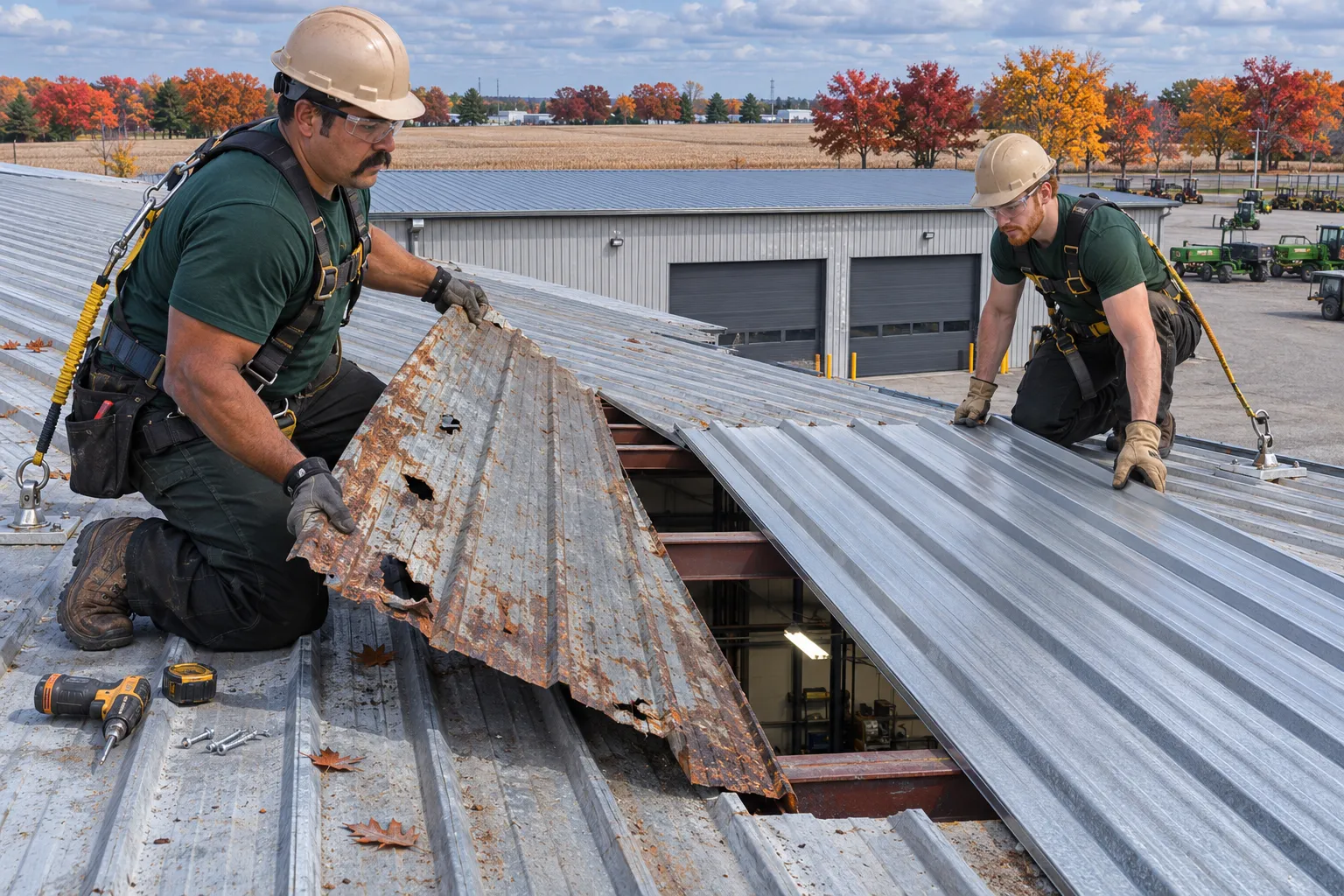
Loose fasteners, open laps, and rusted panels on metal buildings.
Commercial Metal Roof Repair details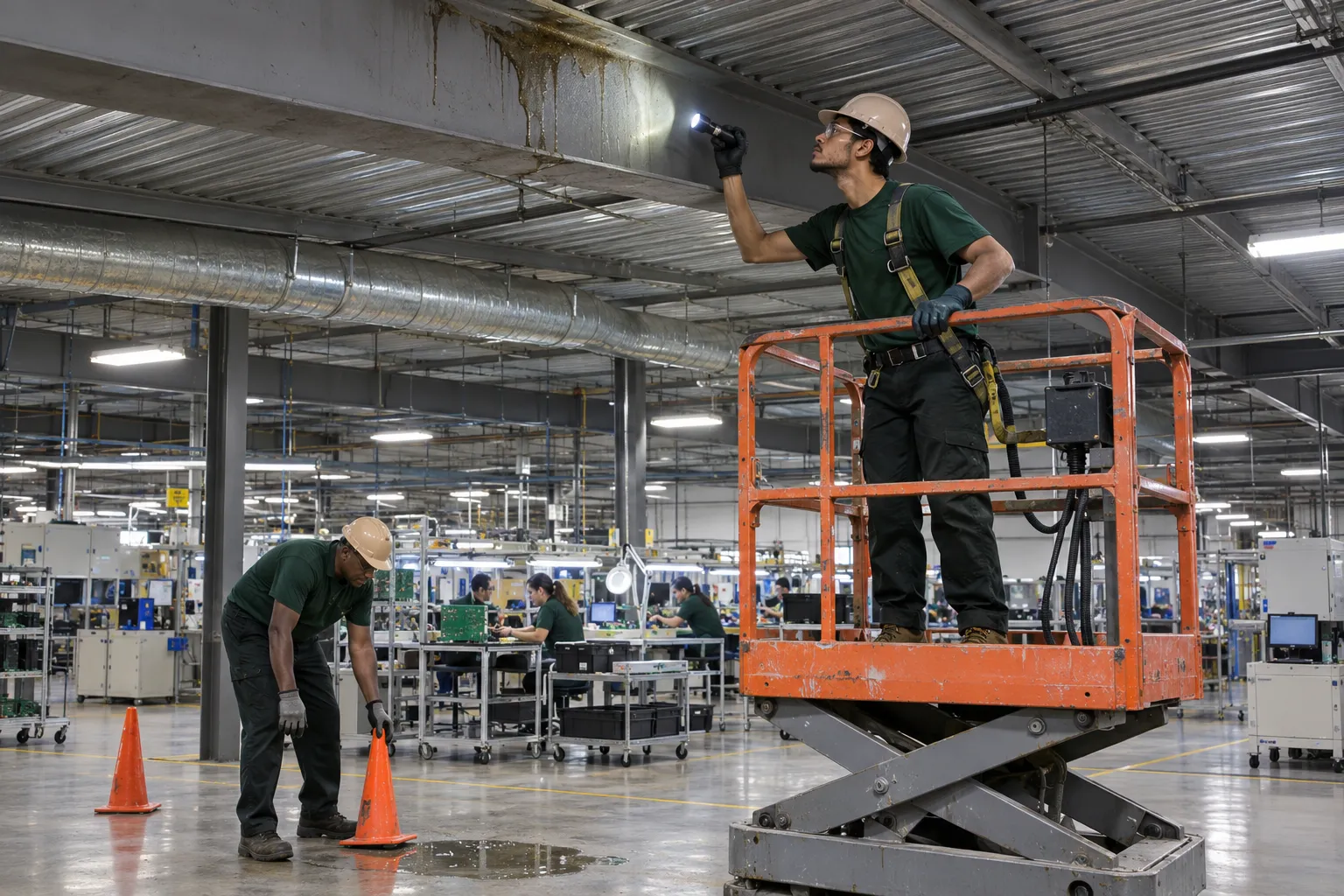
Ceiling stain traced back to the opening on the roof.
Commercial Roof Leak Repair details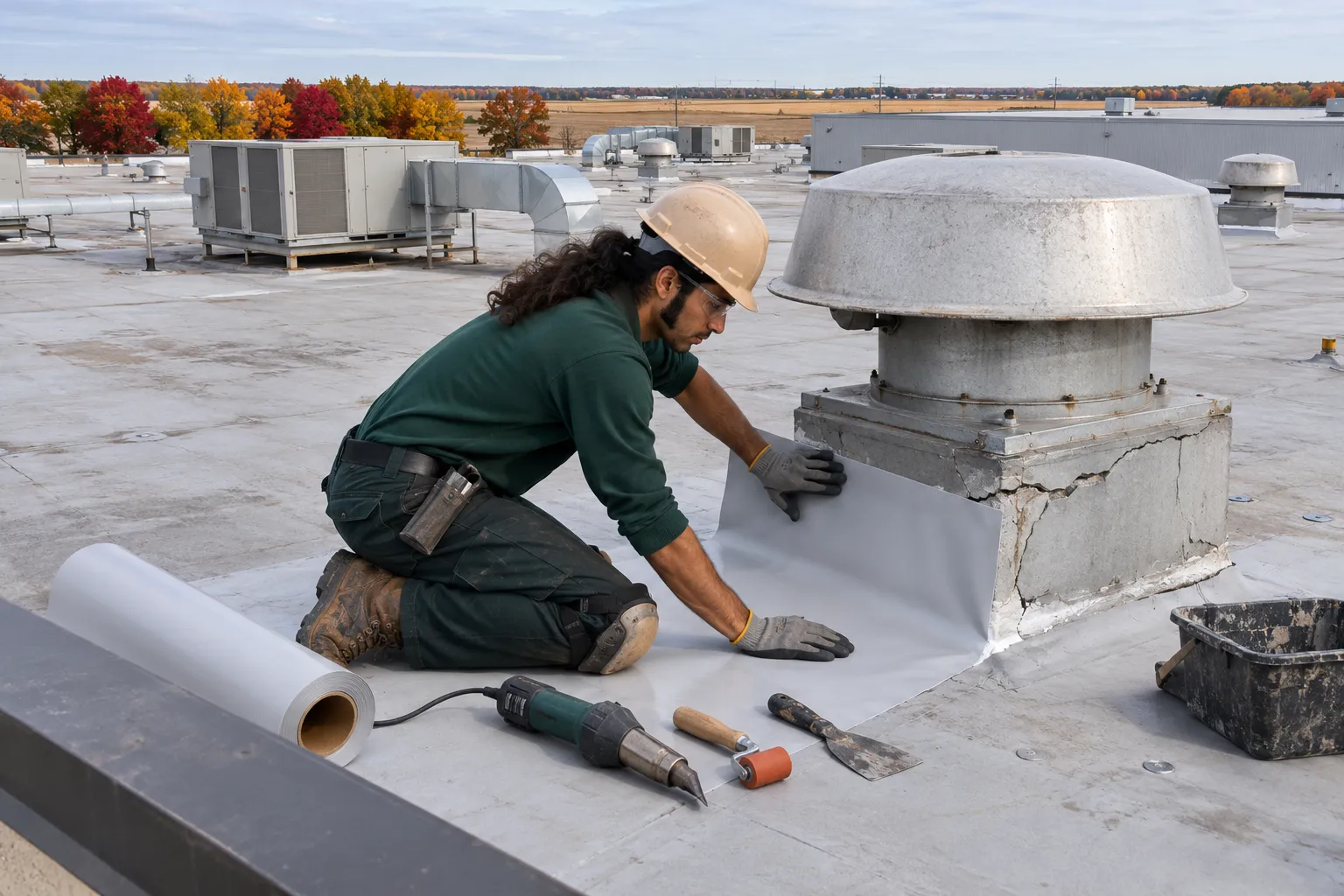
Stacks, curbs, and residue on roofs above production lines.
Industrial Roof Repair detailsCall and tell us the hours the space is open. We will plan the visit to fit them.
Occupied buildings need one extra step. These five keep work and business apart.
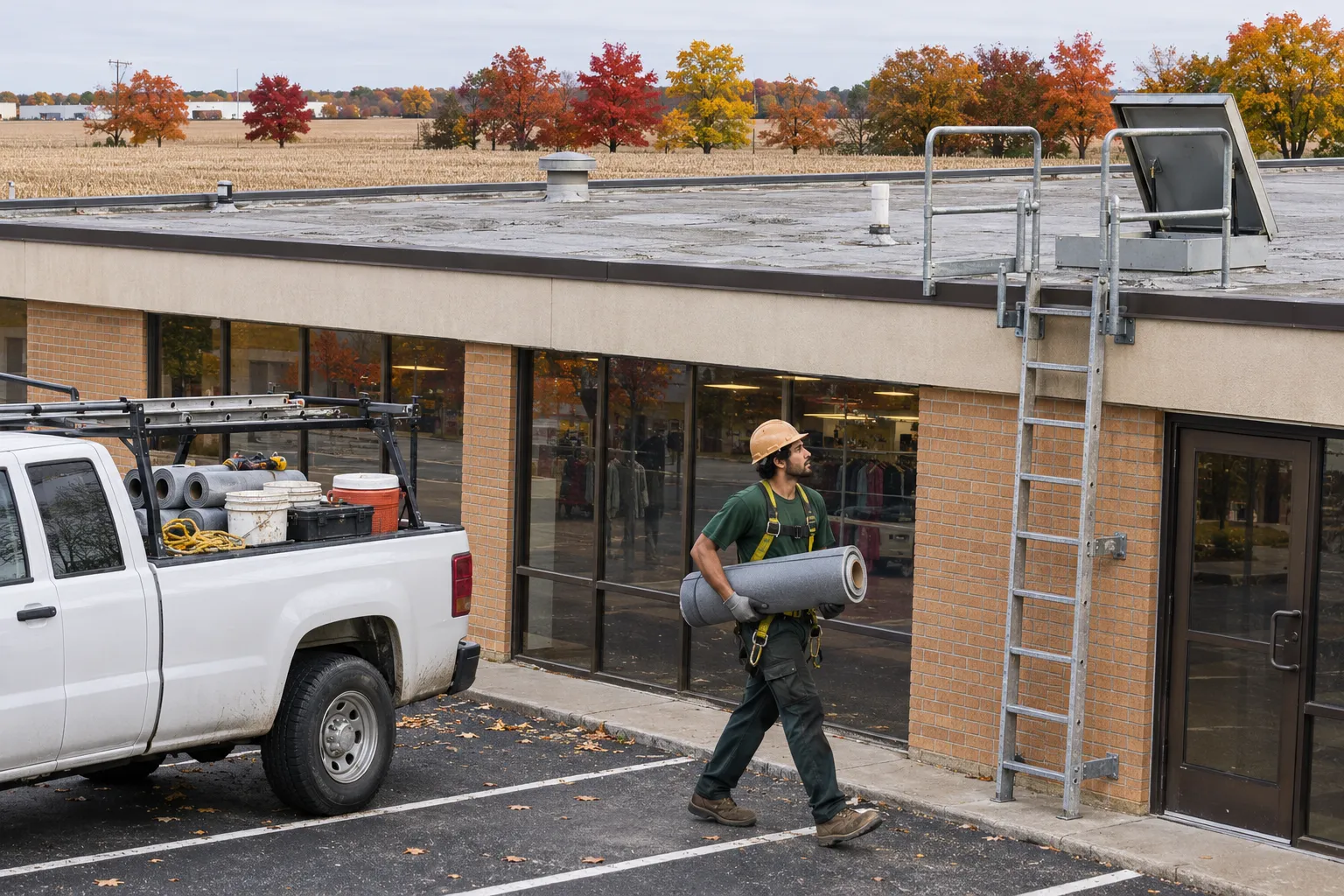
We set work hours with the owner or manager and write a short notice tenants can post, naming the area and the times. Any rooms that should stay empty under the work are named in the notice.
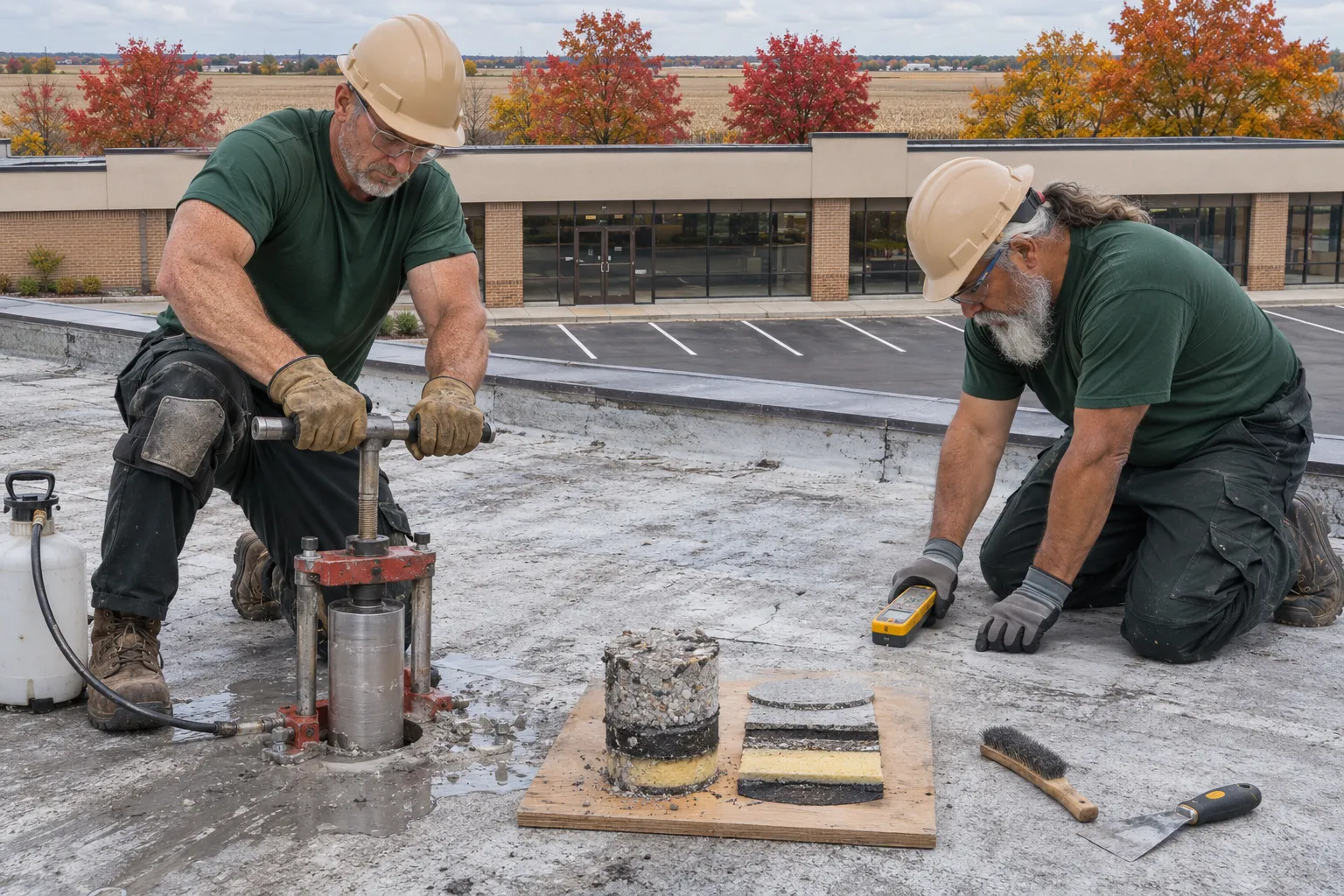
Drains, seams, edges, and blisters are checked, and stains inside are matched to the roof above with moisture readings. Office ceilings are checked room by room where tenants allow access.
Air intakes near the work are covered while adhesives cure, and entrances under edge work are kept clear or protected.
Each area is finished and cleaned before the space below reopens, with photos of the completed details. Entrances reopen as soon as edge work above them is finished.
Photos of the finished work go to the owner or manager the same week, ready to share with tenants who asked.
Plants, warehouses, and metal shops in these towns are where else we repair roofs. Not listed? Call us or send us a message.
Older downtown blocks, brick parapets, and plant roofs.
Huntington commercial roof repair →Metal shops, storage buildings, and farm-business roofs.
Huntertown commercial roof repair →Flat roofs on Auburn offices, plants, and stores get inspection, moisture checks, and repairs matched to the membrane, the same as anywhere we work. Drain flashing, blistered areas, open seams, and failed perimeter edge metal are the most common repairs in town.
Quiet work can go on while the store is open. Loud work, odors near intakes, and hatches over the sales floor are timed for early hours or closed days.
If you want them told, we write a short notice naming the area, the dates, and the hours, which the owner or manager can share.
They can reach air intakes near the work. We cover intakes close to the repair while adhesives cure, or use heat-welded methods where the membrane allows.
Usually loose edge metal or a clogged gutter at the front edge. Wind lifts the edge strip and water runs off the roof at the door instead of into the gutter.
Leaks do not wait for spring. Temporary covers and cold-weather repairs stop the water, and adhesive work waits for a milder day.
Settled insulation near drains, clogged gutters at the front edge, and roofs built nearly flat. Clearing drains and building up low spots moves the water.
Weekend or early-morning work is common for stores that cannot close a section during open hours. Tell us the quiet times, and the crew schedule is built around them, weather permitting.
Tell us the hours the building is open and where the leak shows. We will plan the visit around both.