Fasteners
Metal Shop Roof Repair For Loose Screws
Screws lose their grip and washers crack, so every purlin line becomes a row of small leaks. Oversized screws with new washers fix each row.
Service Area
Huntertown commercial roof repair is mostly metal: shops, storage buildings, and farm-business roofs with loose screws and leaking laps.
Huntertown commercial roof repair on metal shops comes down to fasteners, laps, and trim, because the panels usually outlast them.
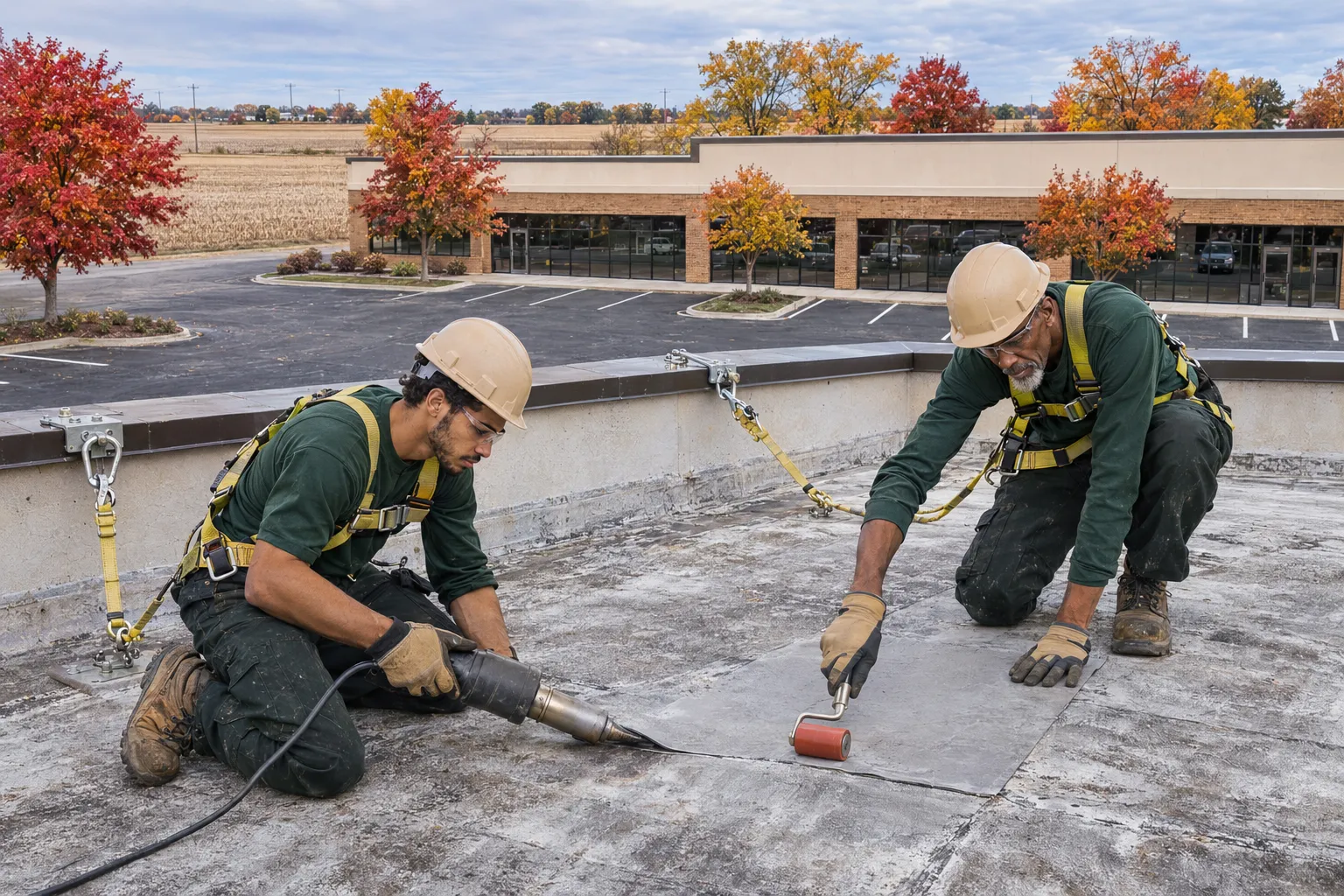
Exposed-fastener panels move with every warm afternoon and cold night. That movement backs screws out, cracks washers, and dries out lap sealant, one row at a time. Equipment doors left open in winter let warm, wet air reach cold panels, which adds condensation to the mix.
Open sides, wide doors, and equipment traffic add wind-driven rain and dents to the list. We repair those details and leave the solid panels in place. Dents from hail or falling ice get checked at the laps, where they crack the sealant.
Metal shops and storage buildings show these six problems more than anything else.
Screws lose their grip and washers crack, so every purlin line becomes a row of small leaks. Oversized screws with new washers fix each row.
Overlaps between panels open as sealant ages, and wind pushes rain sideways into the building. Butyl tape and new fasteners close the lap again.
Closures under the cap fall out and the cap loosens, letting snow and rain blow in at the peak. New closures and a refastened cap close the peak.
Trim rusts first where snow sits and where water drips off the panel ends. Matching trim replaces the rusted pieces.
Translucent panels turn brittle and crack at their fasteners after years of sun.
Flashing at walls and lean-to roofs bends loose in wind and lets rain run behind it.
Metal repairs are many small fixes. Here is how a shop roof changes when they are done.
Before The Repair
After The Repair
Metal repair leads in Huntertown, and the other three services reach town as well.
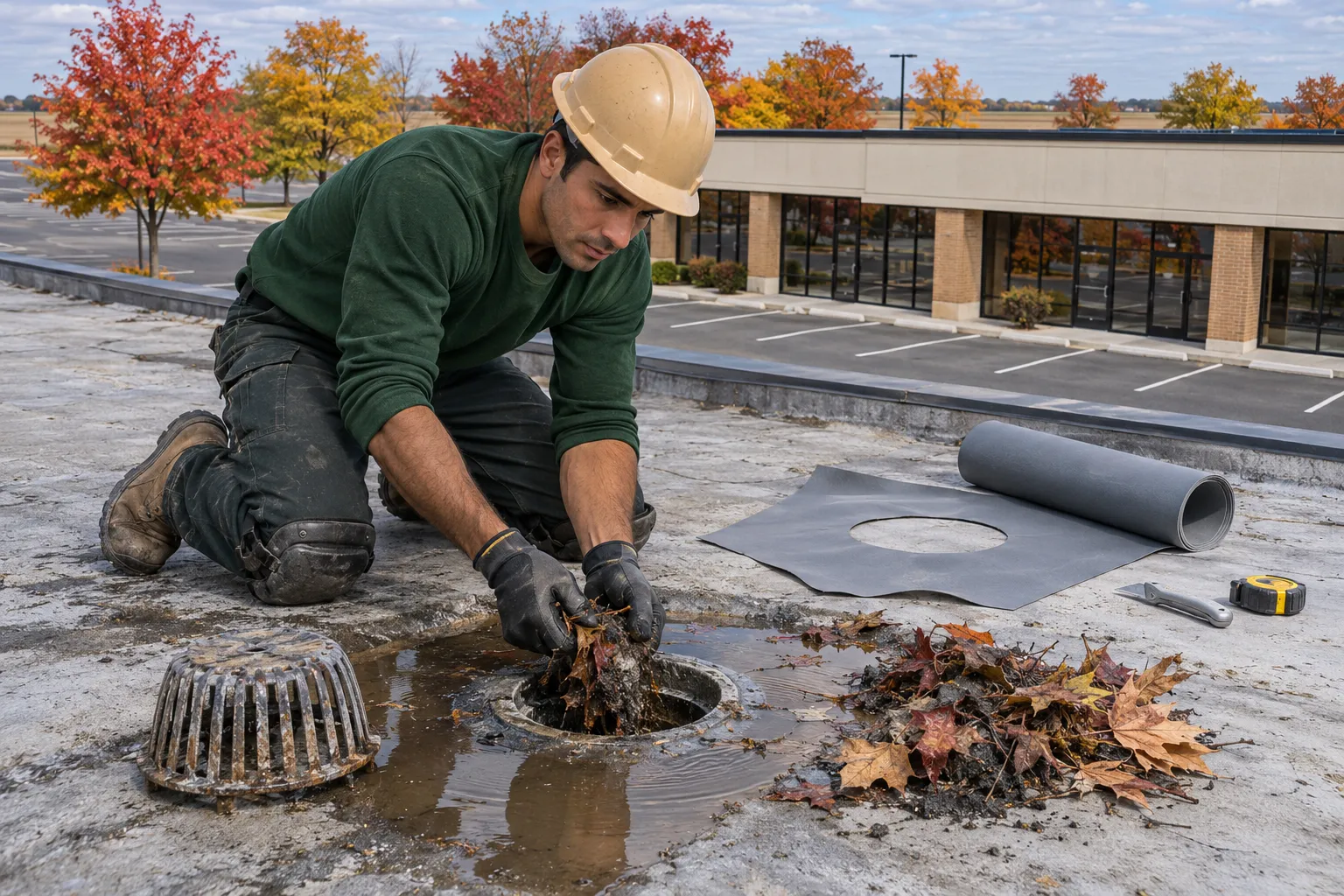
Drains, seams, and blisters on TPO, EPDM, and built-up roofs.
Flat Roof Repair details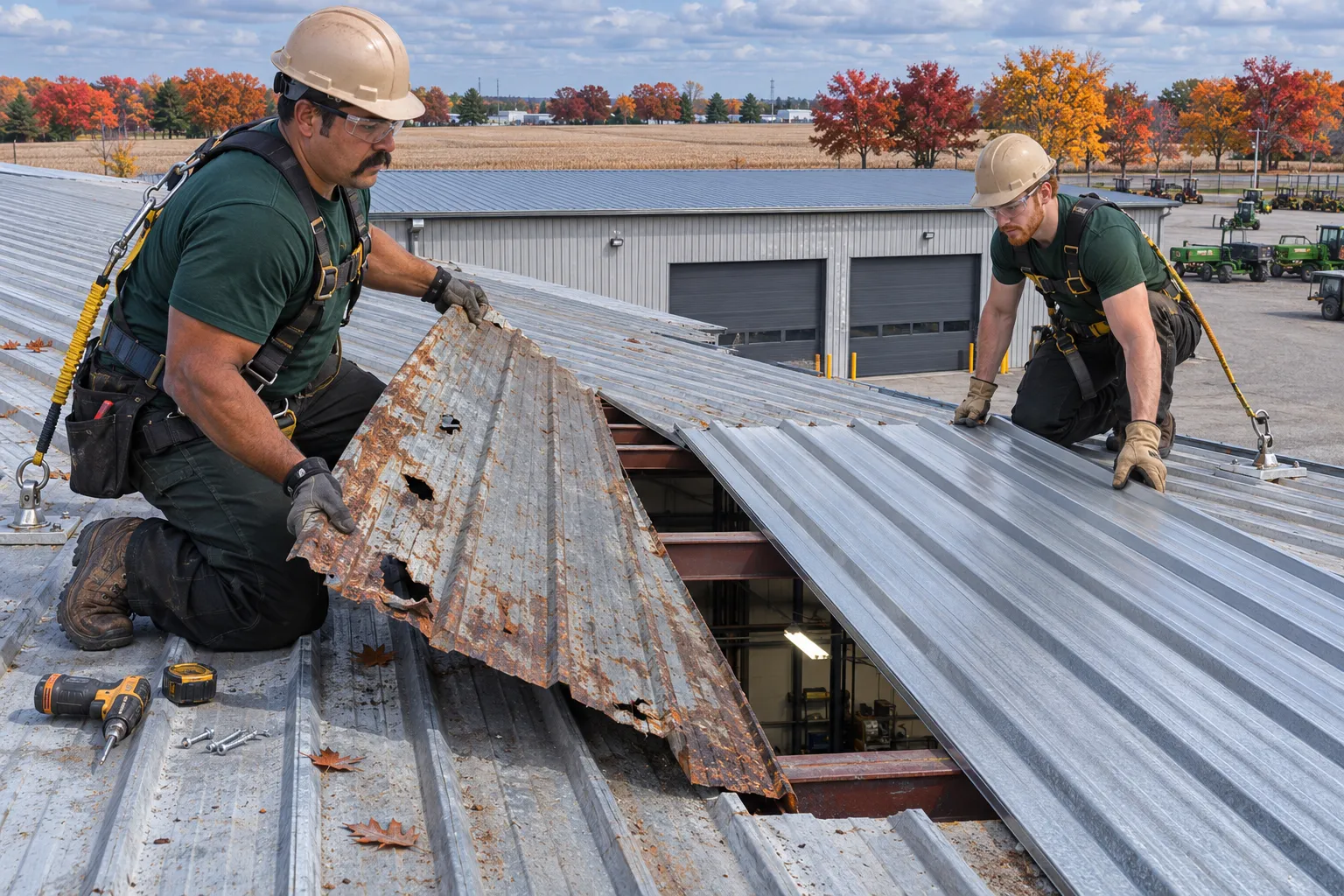
Loose fasteners, open laps, and rusted panels on metal buildings.
Commercial Metal Roof Repair details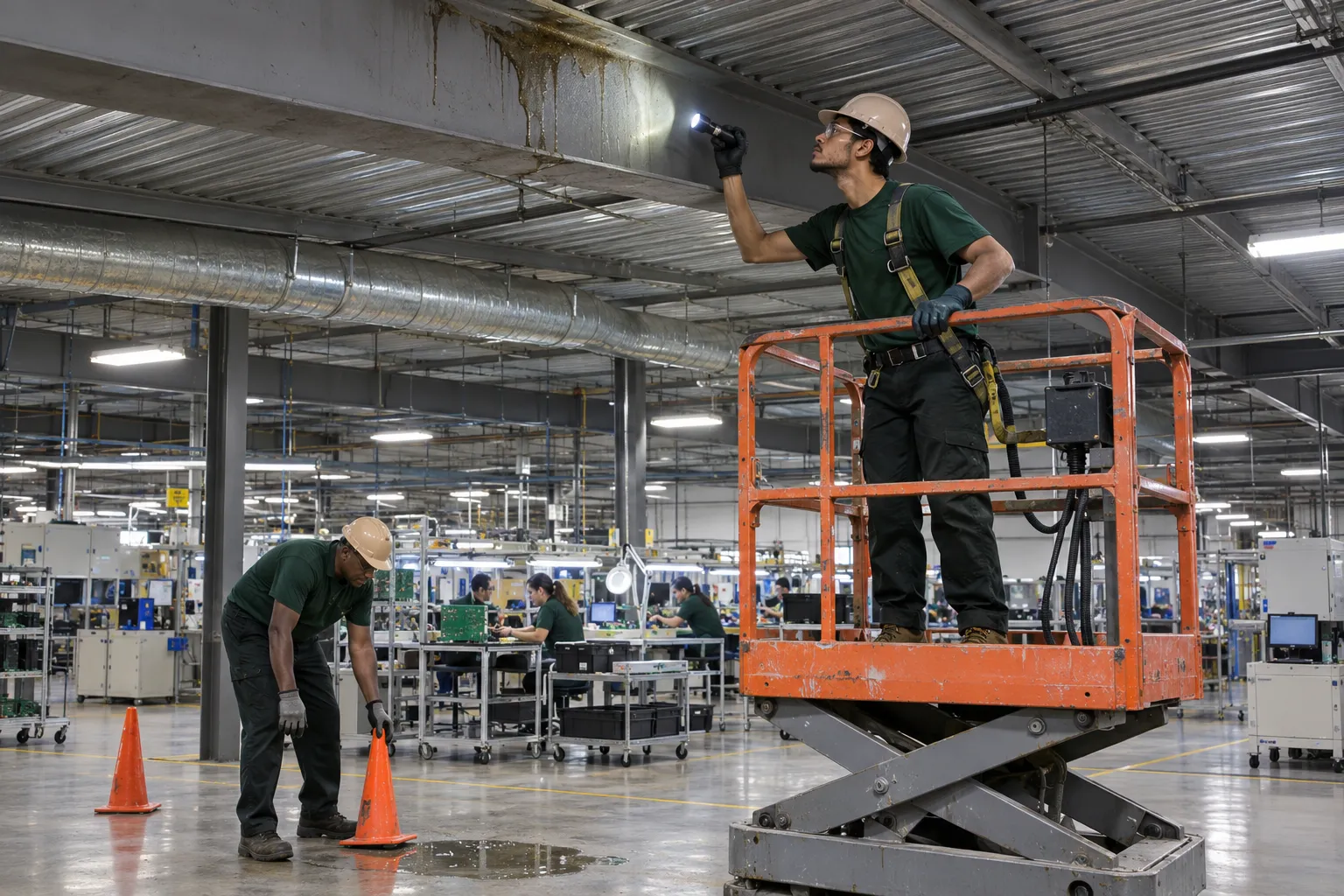
Ceiling stain traced back to the opening on the roof.
Commercial Roof Leak Repair details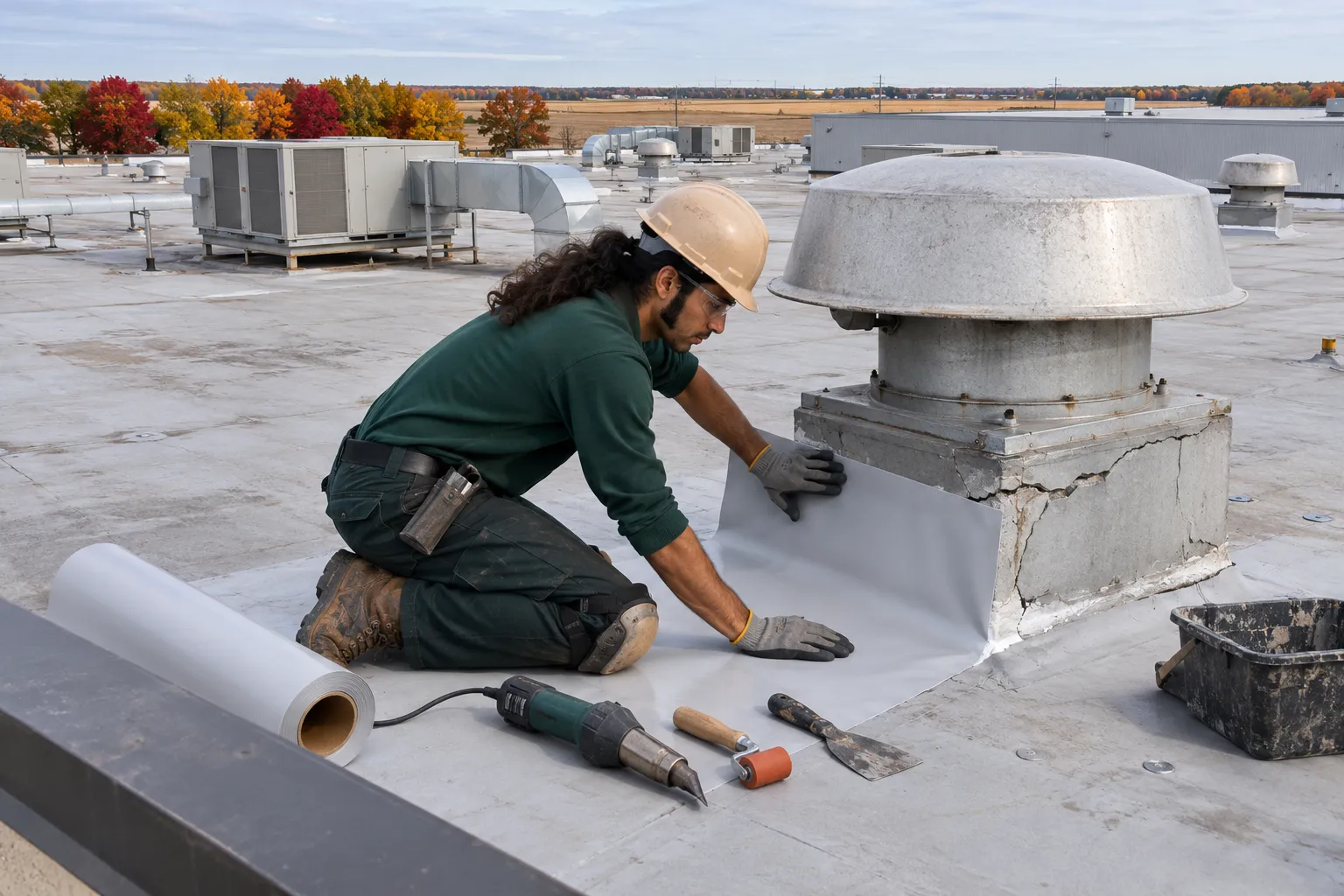
Stacks, curbs, and residue on roofs above production lines.
Industrial Roof Repair detailsCall before the next storm. Ridge closures and caps are quick to replace once we see the profile.
Metal shop repairs go row by row. These five steps keep every fastener accounted for.
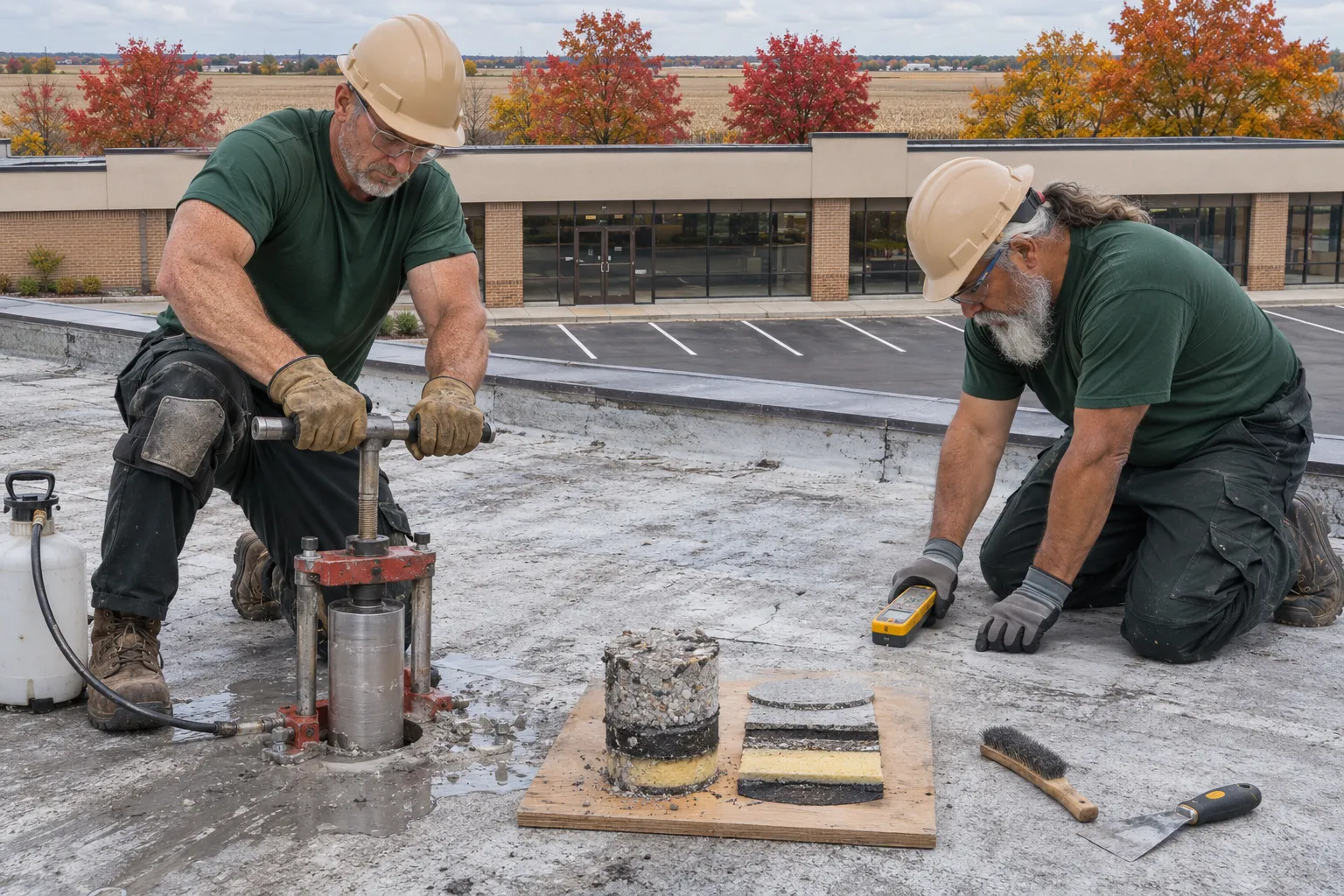
Daylight at laps, drip marks under purlins, and wet insulation show which panel runs leak before anyone climbs up. Wet spots on the floor are marked so they can be matched to the roof above.
Each purlin line is walked and loose or cracked fasteners are marked, so none get skipped on a long roof. Rows with cracked washers are counted, since one bad row usually means more.
Oversized screws with new washers replace worn ones, and open laps are cleaned and sealed with butyl tape. Each new screw is driven snug against its washer without crushing it.
Ridge caps, closures, and rusted trim are replaced with metal matching the panel profile and color where available.
After the work, we look up from the floor again for daylight at laps and at every fastener row that was replaced.
Warehouses, plants, and storefronts in these towns are where else we repair roofs. Farther out? Call us or send us a message.
Older downtown blocks, brick parapets, and plant roofs.
Huntington commercial roof repair →Metal shops, storage buildings, and small commercial properties make up much of our Huntertown work. The usual repairs are backed-out fasteners, leaking laps, worn ridge caps, and rusted trim, fixed with oversized screws, resealed laps, and new trim so water stops at those points.
A worn hole no longer grips the original screw. A slightly larger screw cuts fresh threads into solid metal and seats a new washer tight against the panel.
Surface rust is cleaned and the details repaired. Panels rusted through in a few spots are patched or swapped. Rust holes across much of the roof point to new panels instead.
Once a year and after big storms works for most shops. Fasteners and lap sealant are where wear shows first, and catching it early keeps repairs small.
We repair the roof and the flashing where roof meets wall. Wall panel damage away from the roof line is outside our repair work.
Warm air from heaters or equipment meets cold panels and condenses underneath. Torn insulation facing makes it worse. We check for it before calling a drip a leak.
Yes. Cracked translucent panels are replaced with the matching profile and sealed into the laps with butyl tape and new fasteners.
A full fastener check, resealed laps where sealant failed, new ridge closures, and any rusted trim swapped. Most shops get all of it in one visit, worked row by row across the roof.
Tell us the building size and where it drips. We will check every row of fasteners.