Wind
Wind Damaged Roof Edge Repair
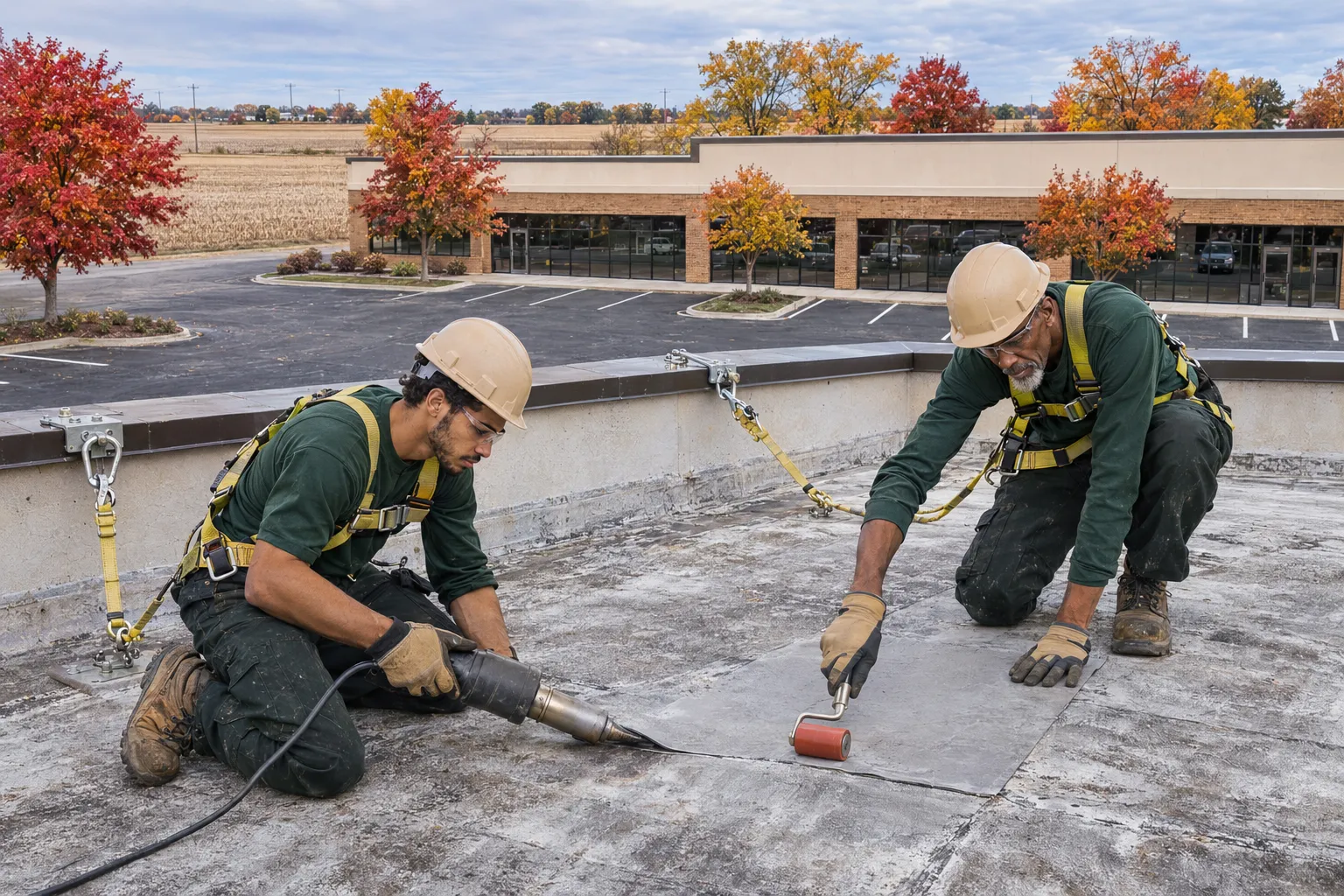
Gusts lift edge metal and peel the membrane behind it, opening a long gap along the roof edge. New edge metal goes on before the membrane is reattached.
Service Area
Bluffton commercial roof repair after a storm starts with documentation, then temporary cover, then permanent repair once the scope is clear.
Bluffton commercial roof repair after wind or hail follows a set order, so nothing gets patched before it is photographed.
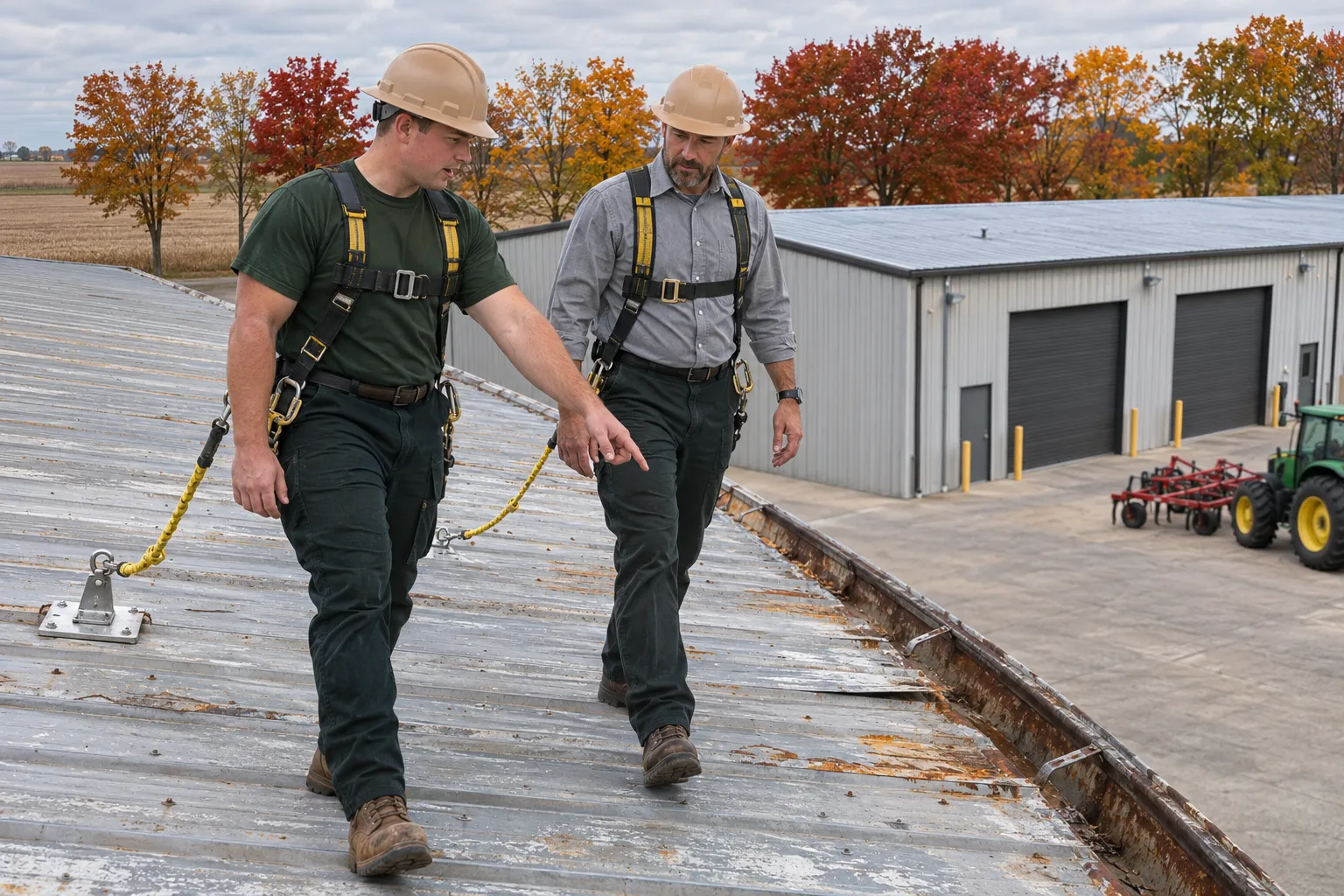
Storm damage hides in places owners cannot see from the ground: bruised membrane, crushed insulation, lifted edge metal, and dented flashing. Photos and measurements come first, because insurers usually want them. Edges on the windward side and the first rows of membrane behind them usually take the worst of it.
If water is already getting in, a temporary cover goes on that day. Permanent repairs follow once the full scope is written down. That keeps the claim record and the finished repair in step with each other.
After wind and hail, these six kinds of damage show up most on commercial roofs.
Gusts lift edge metal and peel the membrane behind it, opening a long gap along the roof edge. New edge metal goes on before the membrane is reattached.
Hail cracks single-ply membrane and crushes the insulation under it, even where the surface looks intact. Moisture readings tell crushed boards from dry ones.
Impacts dent panels at the seams and crack the sealant inside the laps. Laps get opened, cleaned, and resealed with butyl tape.
Tarps and temporary patches stop active leaks until the permanent repair is scheduled. Each cover is checked again after the next storm.
Brittle skylight panels break under hail and let water straight into the building. Replacement panels match the profile of the old ones.
Vent caps and flashing take dents until their seams split. New caps and resealed flashing close each opening.
Storm repairs end with a dry roof and a paper trail that matches the work.
Before The Repair
After The Repair
All four services reach Bluffton. After storms, leak and flat roof repairs lead.
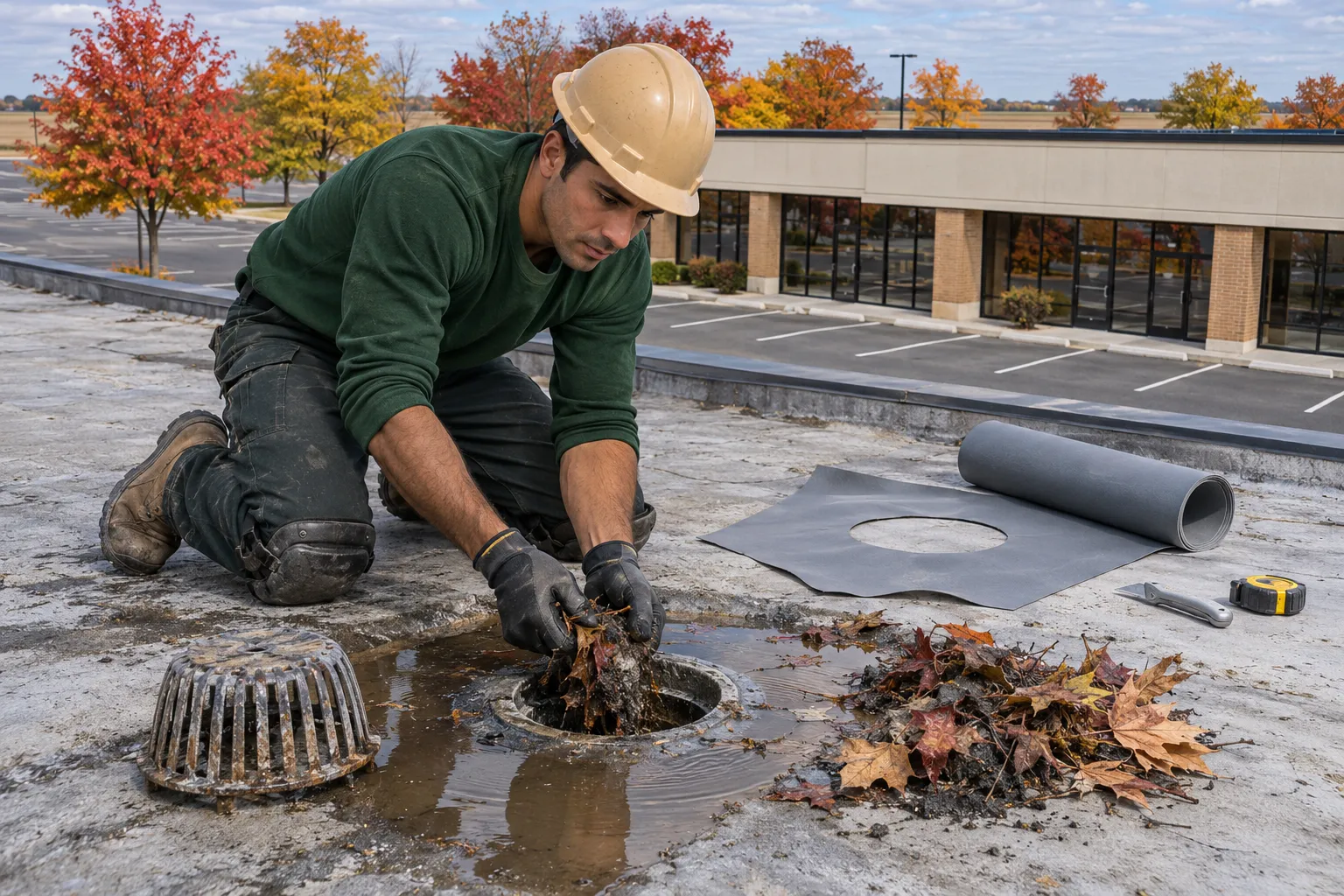
Drains, seams, and blisters on TPO, EPDM, and built-up roofs.
Flat Roof Repair details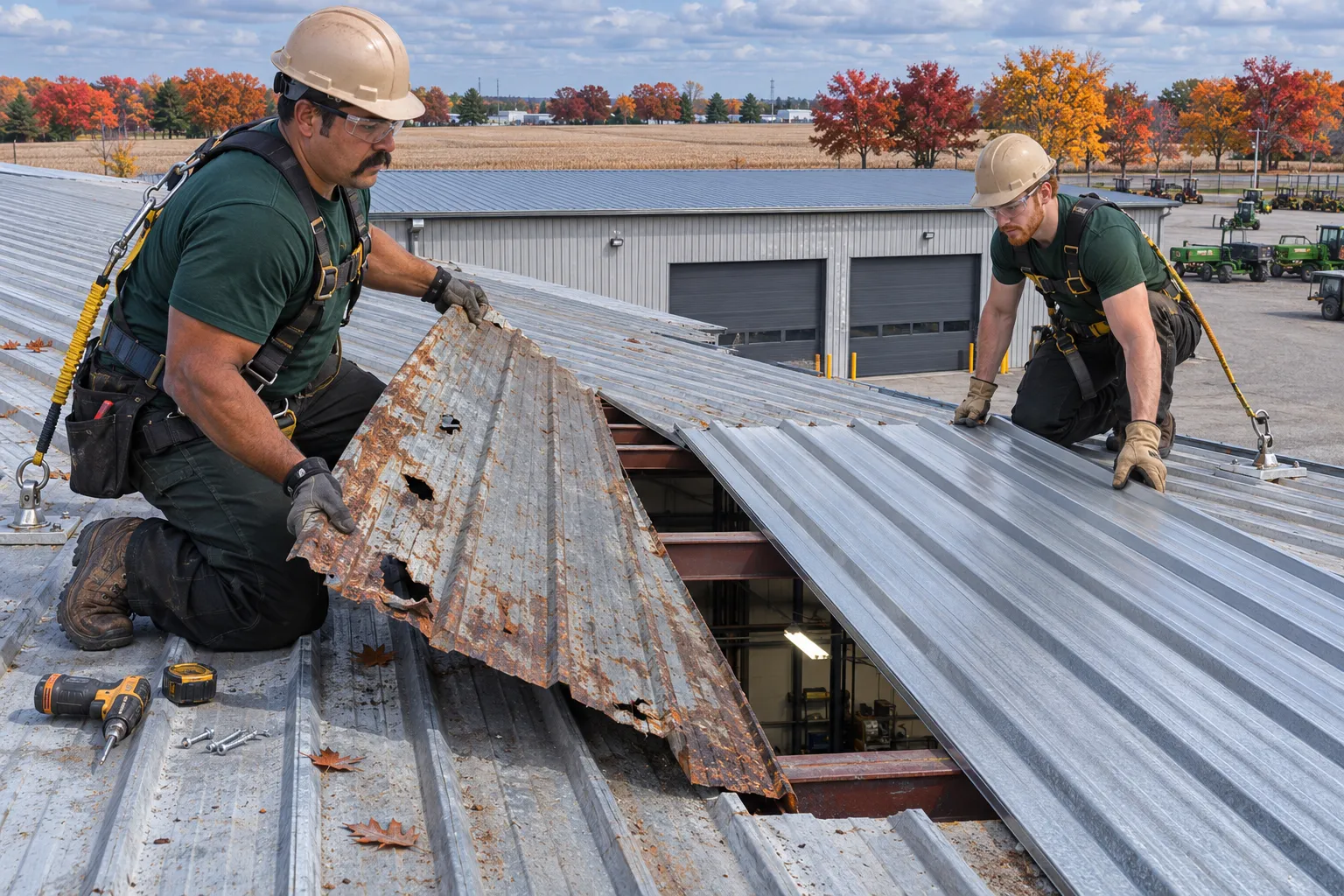
Loose fasteners, open laps, and rusted panels on metal buildings.
Commercial Metal Roof Repair details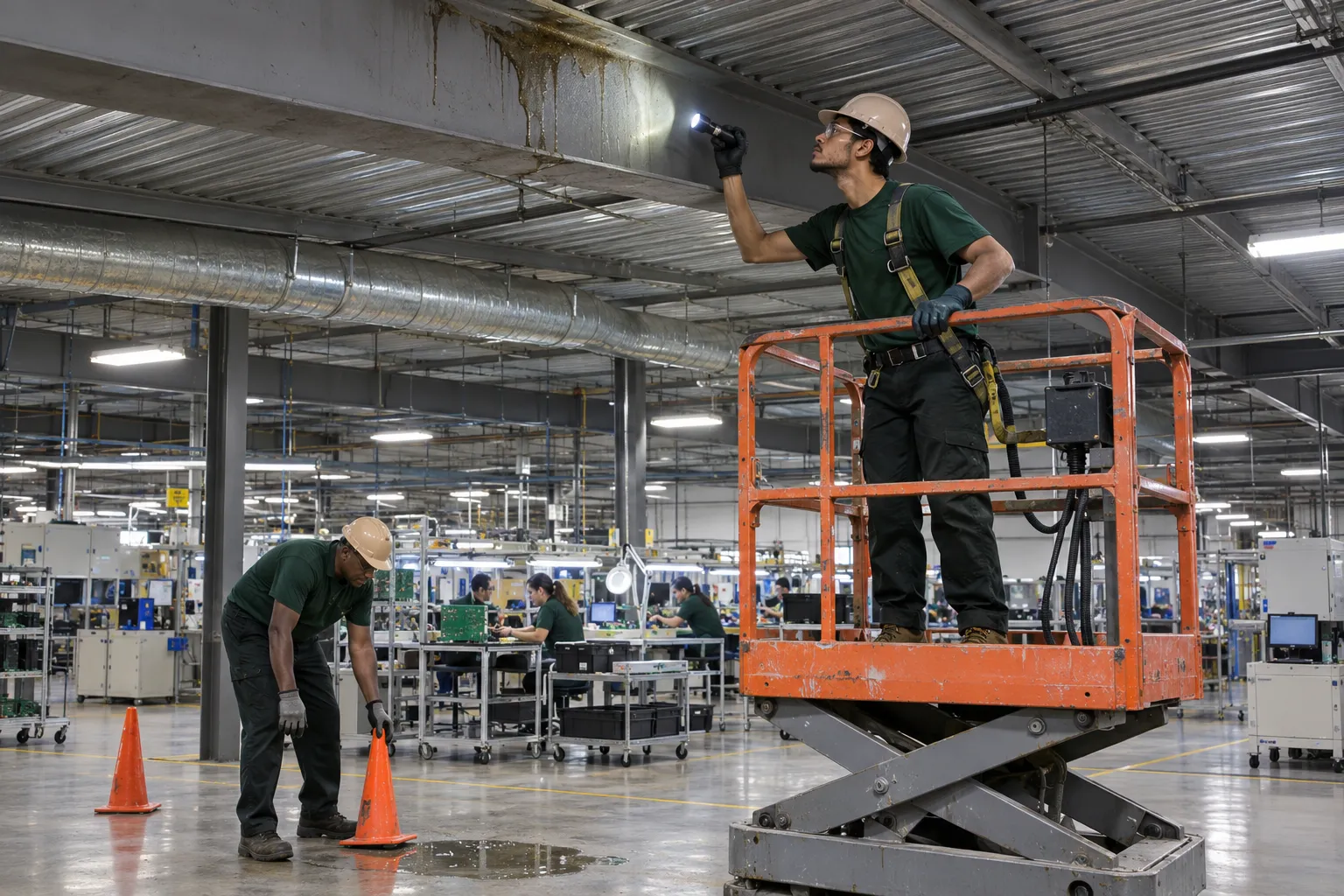
Ceiling stain traced back to the opening on the roof.
Commercial Roof Leak Repair details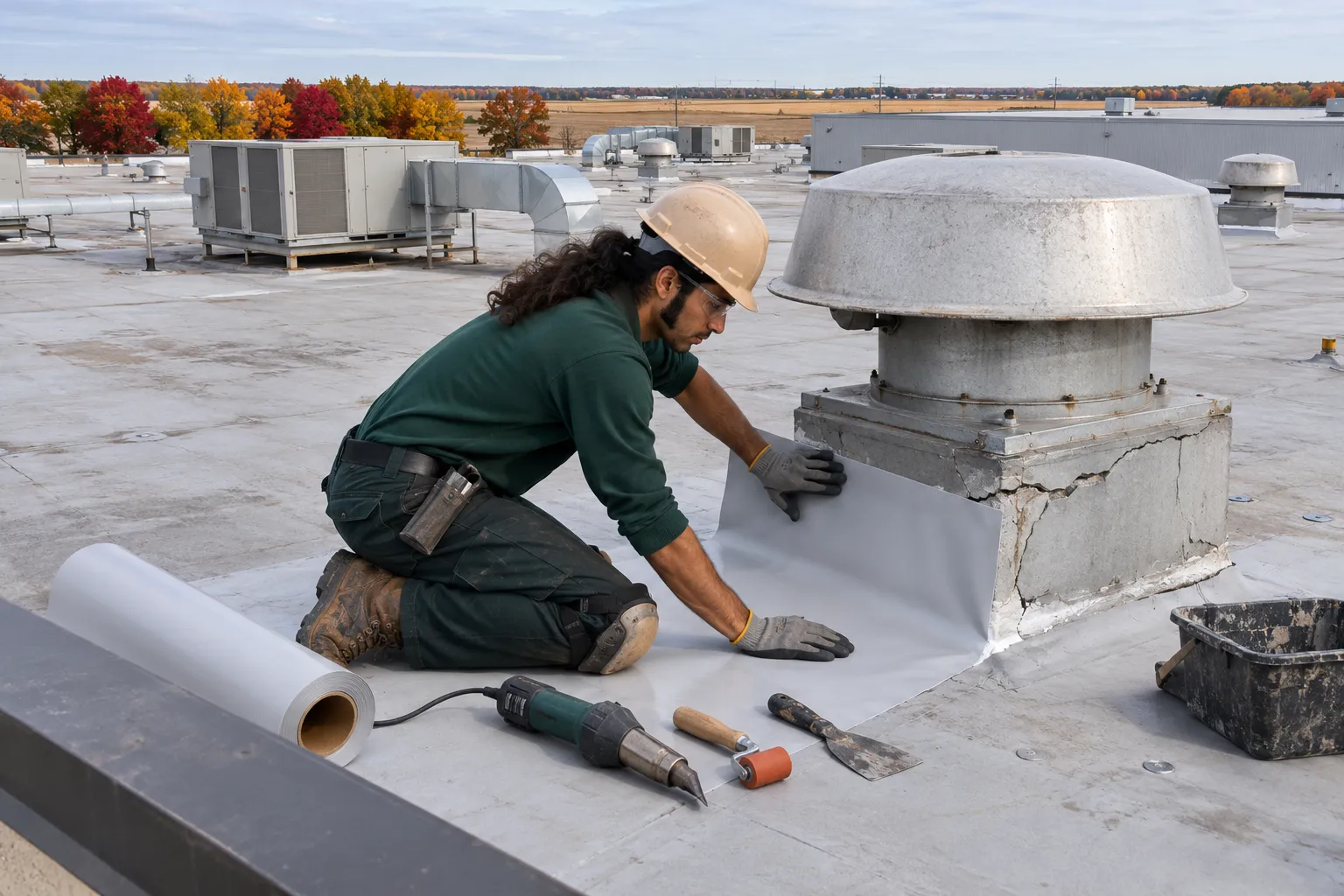
Stacks, curbs, and residue on roofs above production lines.
Industrial Roof Repair detailsCall before anyone patches anything. We will document the damage first, then cover any opening letting water in.
Storm visits follow this order every time, so the record and the repair match.
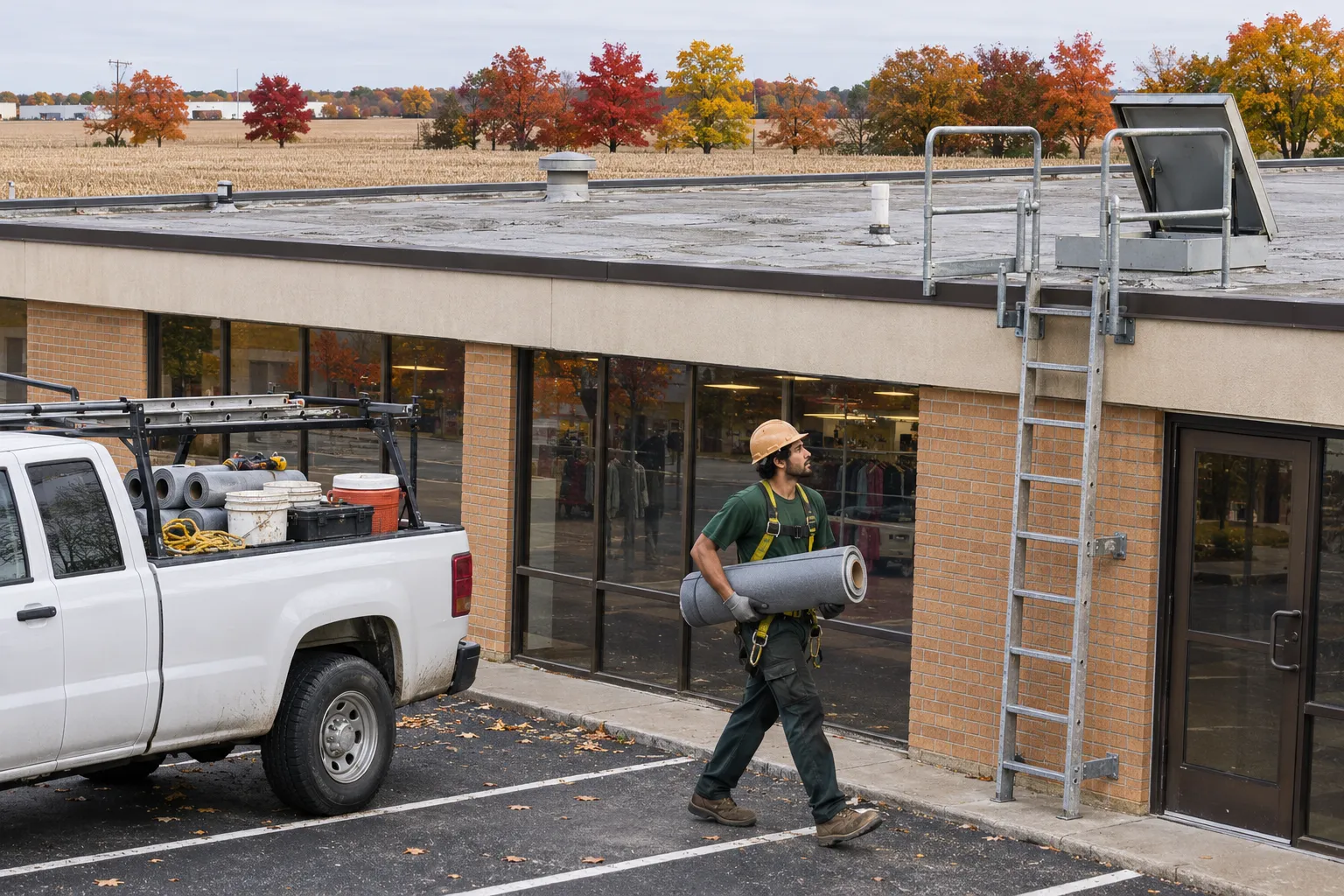
Every edge, seam, flashing, and skylight is checked, with photos and measurements of each damaged spot before anything is touched. Damage is marked on a roof sketch so each photo can be matched to its location.
Tarps or temporary patches go over openings that are leaking now, and wet ceiling areas inside are noted. Covers are weighted or fastened so the next gust does not lift them.
Readings and core cuts show whether hail crushed or soaked the insulation, which changes the size of the repair. Crushed boards under intact membrane are the damage owners most often miss.
Edges, membrane, seams, and flashing are repaired or replaced, and the photo record is updated with the finished work.
The before and after photos and measurements are collected in one record you can give the adjuster.
Older blocks, plants, and metal shops in these towns are where else we repair roofs. Not on the list? Call us or send us a message.
Older downtown blocks, brick parapets, and plant roofs.
Huntington commercial roof repair →Metal shops, storage buildings, and farm-business roofs.
Huntertown commercial roof repair →Bluffton is part of our service area. After wind or hail we look for lifted edges, torn membrane, cracked seams, and damaged flashing, record what we find, and cover any opening letting water in. Permanent work follows once the scope is set.
Both, in either order, but keep anyone from patching before the damage is photographed. Our photos and measurements can go to the adjuster with your claim.
Yes. Hail bruises membrane and crushes insulation boards without leaving holes you can see from below. A close look on the roof and moisture readings find it.
Only until the permanent repair is scheduled. Tarps and temporary patches stop active leaks, but wind and sun wear them out quickly.
Edge metal, coping, the first rows of membrane or panels along the windward side, rooftop unit panels, and any loose flashing. Wind damage usually starts at an edge.
The materials match the roof, as with any repair. What changes is the record: each damaged area is photographed and measured before and after.
They can. Dents along seams crack the sealant inside the laps, and leaks appear months later. Checking laps after hail catches it early.
Within days if possible, and right away if water is coming in. Early photos make a cleaner record for the insurer, and a quick temporary cover keeps wet insulation from spreading.
Call after the storm and before any patching. We will document the damage and stop active leaks.