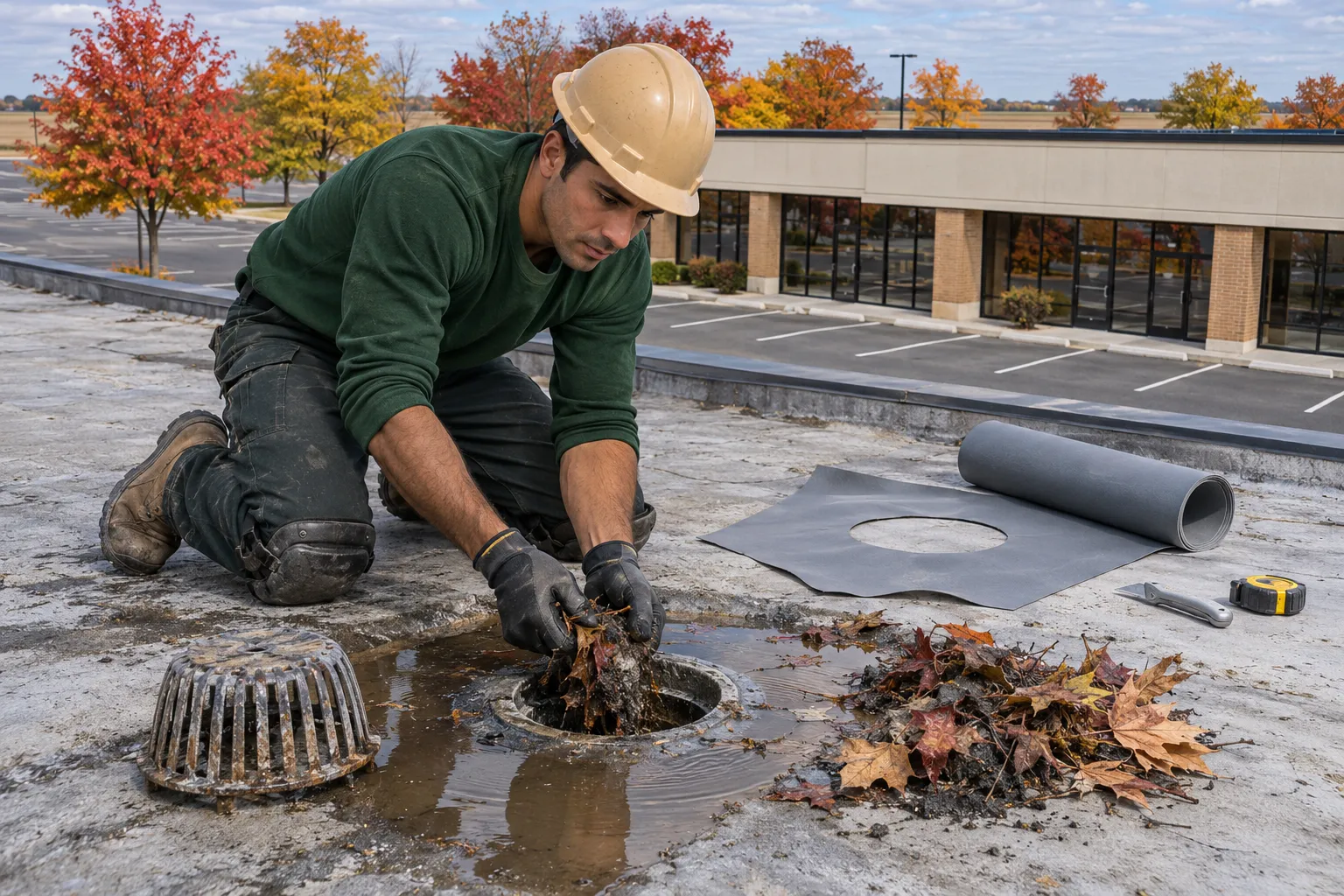
Flat Roof Repair
Low-slope TPO, EPDM, built-up, and modified bitumen roofs on offices, stores, and warehouses. The usual work covers drains, open seams, blisters, edge metal, and the wet insulation sitting under them.
Flat Roof Repair details
Four Repair Services
We provide commercial roof repair services in Fort Wayne for flat membrane roofs, metal panel roofs, active leaks, and plant roofs.
Each of our commercial roof repair services in Fort Wayne starts from the roof system and the symptom, then fixes the detail behind it.
Low-slope TPO, EPDM, built-up, and modified bitumen roofs on offices, stores, and warehouses. The usual work covers drains, open seams, blisters, edge metal, and the wet insulation sitting under them.
Flat Roof Repair details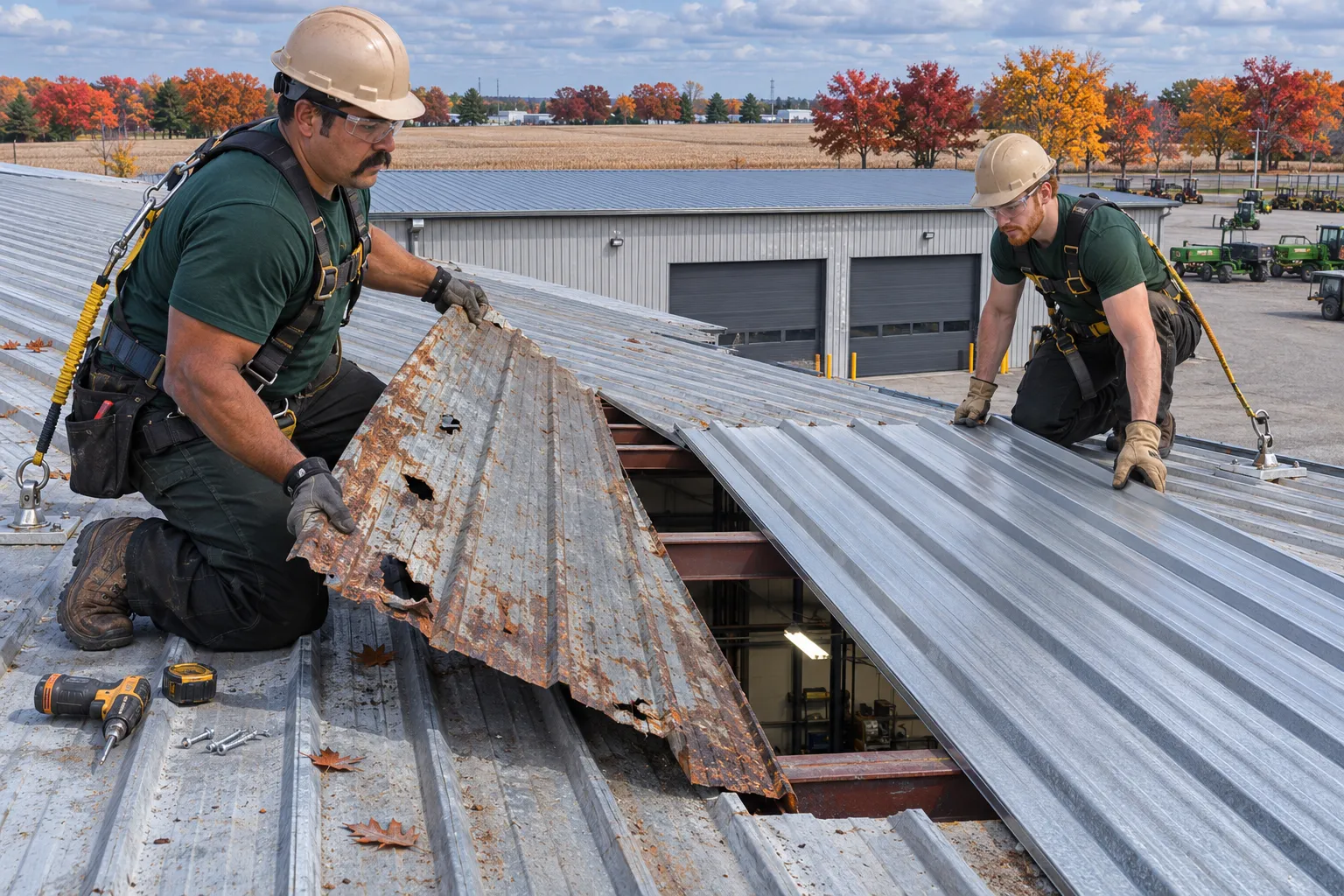
Exposed-fastener and standing-seam panels on shops, plants, and storage buildings. Fasteners, side laps, ridge caps, wall flashing, trim, and rusted panels make up most repairs, while solid panels stay in place.
Commercial Metal Roof Repair details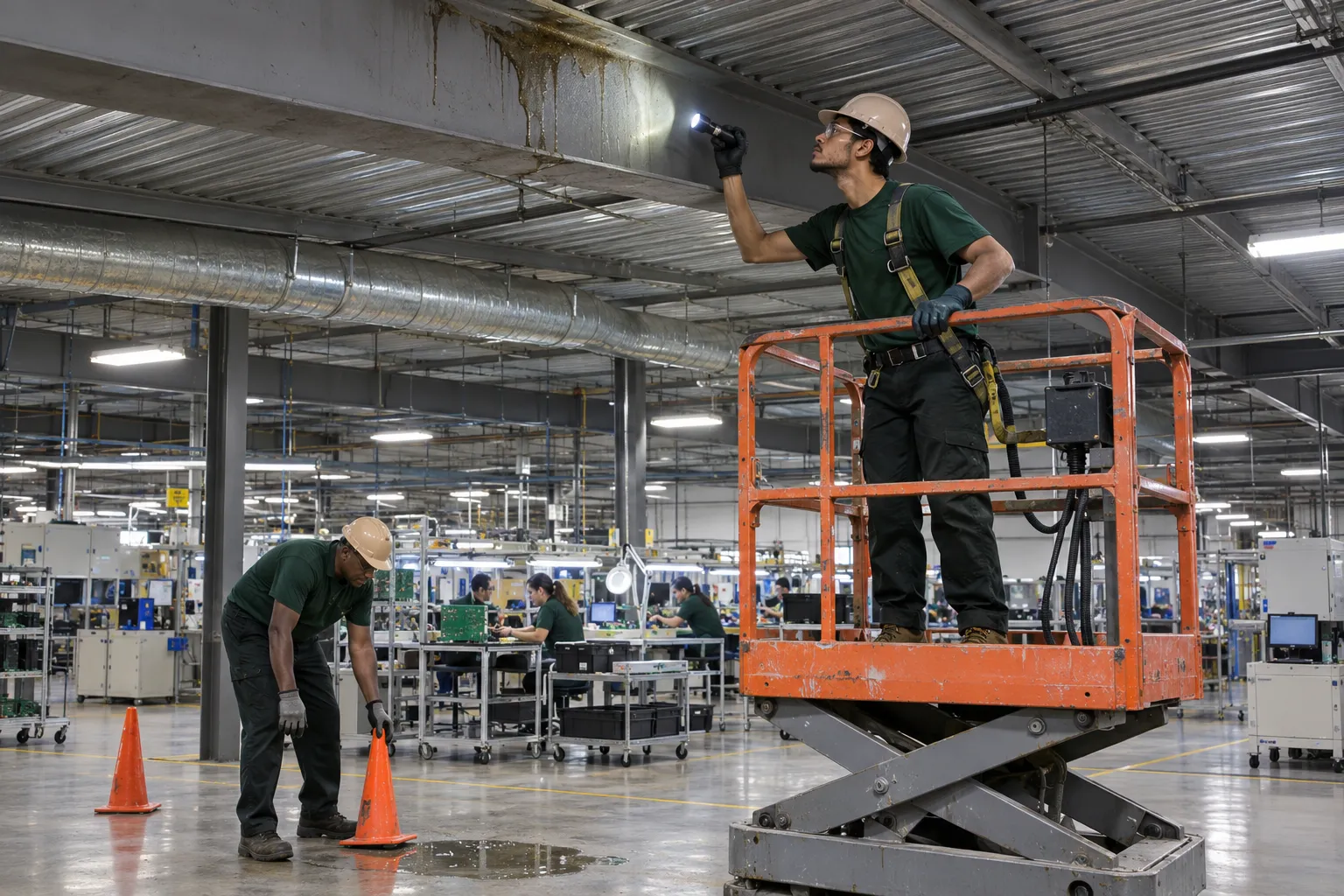
For a drip you can see but cannot place. We trace water from the ceiling stain back along the deck to the opening, then repair that opening on any roof type with matching material.
Commercial Roof Leak Repair details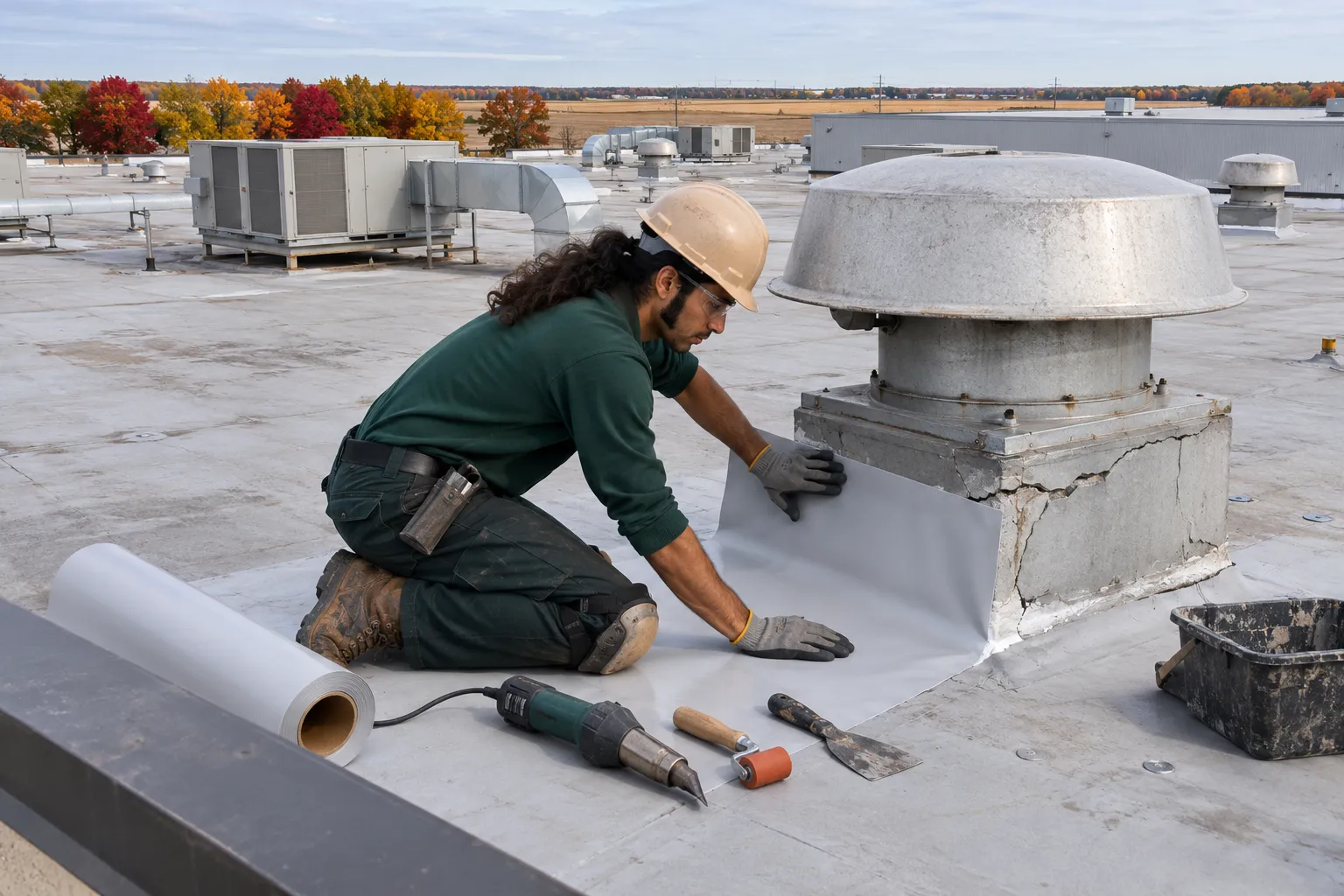
Plant and processing roofs with stacks, fans, skylights, residue, and production lines below. Repairs are phased by roof area, matched to plant safety rules, and timed around shifts.
Industrial Roof Repair detailsMembrane and metal roofs fail in different places, so they get different repairs. Find your roof on one side.
Flat And Low Slope
TPO, EPDM, built-up, and modified bitumen roofs on offices, stores, and warehouses, where water collects and finds a weak detail.
Panels And Trim
Exposed-fastener and standing-seam panels on shops, plants, and farm buildings, where daily movement loosens the details.
Describe the stain, the drip, or the roof type over the phone. That is enough to start, and the roof walk sorts out the rest.
Every service follows the same visit. What changes is the detail we end up repairing.
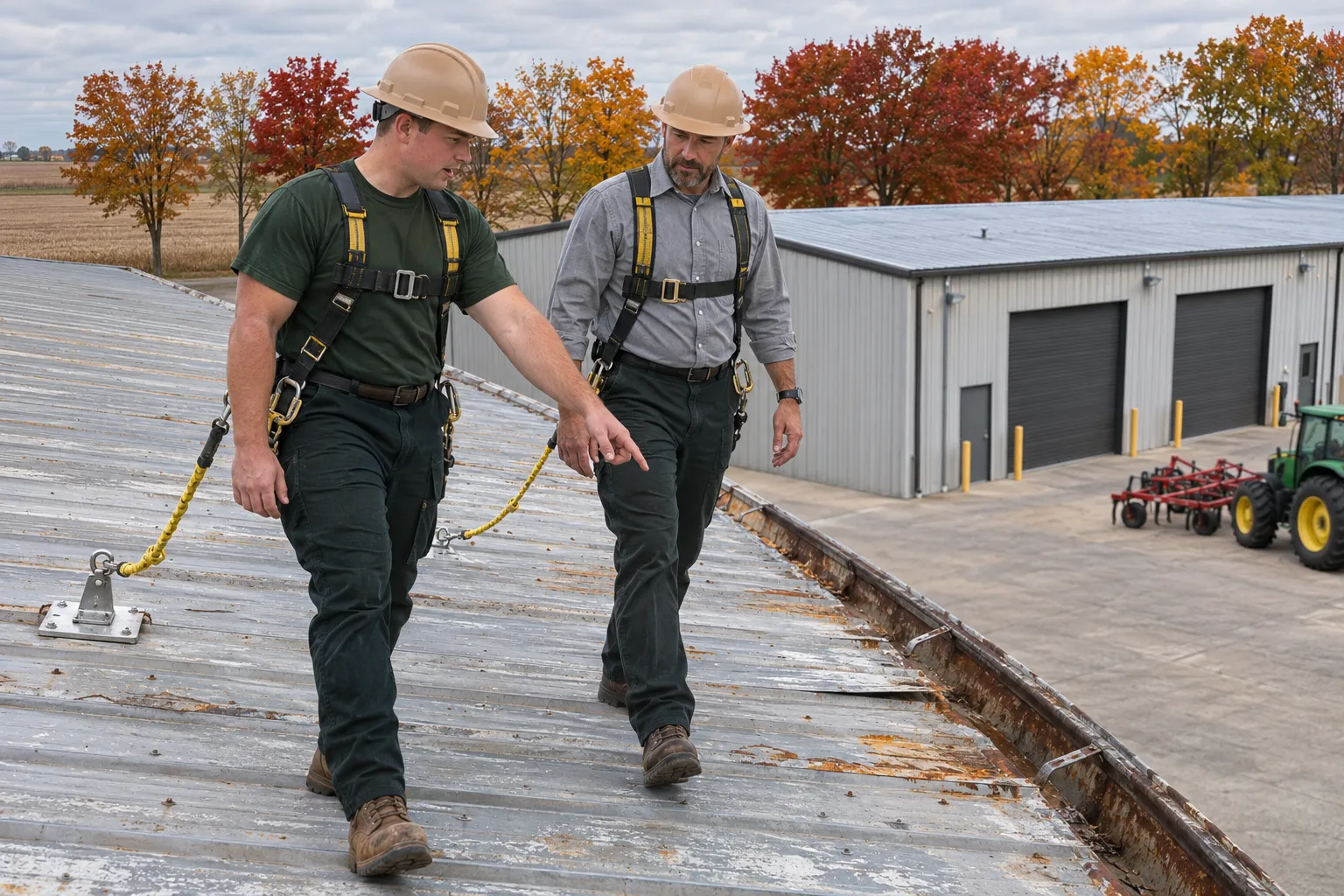
Where the water shows inside, when it started, and whether it follows rain or snowmelt. Those three facts point the roof walk at the right part of the building. Mention any past repairs too, since old patches often hide where the trouble started.
Ladder points, hatch keys, escorts, and any no-go areas over clean rooms or production get settled before the visit. Plants often have their own sign-in and safety steps. Tenants or plant staff under the work area are told the dates ahead of time.
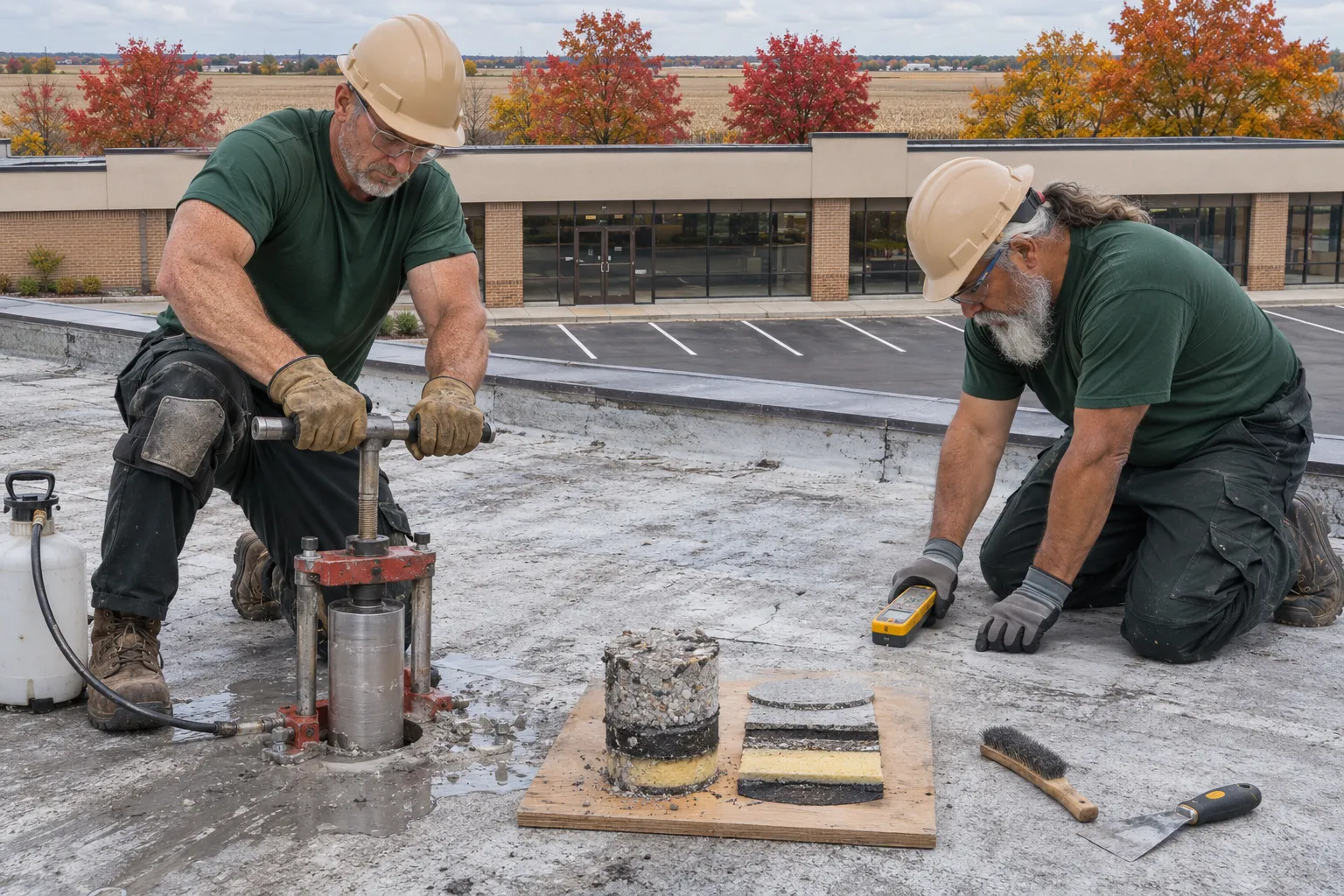
Every drain, seam, curb, and lap gets looked at, and moisture readings show how much insulation sits wet. A core cut settles any doubtful reading. Photos tie each reading to a spot on the roof.
You see the photos and the ranked list, and you choose. Urgent openings come first; worn details that are still holding can be scheduled for a later visit. Nothing is added to the scope without your say.
Damaged material comes out, matching material goes in, and each finished detail is probed or water-tested. The photo record shows what was found and what was done. Matching material means the repair moves and ages with the rest of the roof.
After the next heavy rain or thaw, tell us whether the stain stayed dry. A stain that returns gets traced again, and both visits are photographed for your records.
One visit covers all of it. A warehouse with a ponding drain and a rusted metal canopy gets both items on the same written list, and the work is grouped so the crew is on the roof once where possible. Grouping also saves a second round of roof access and set-up costs.
Yes. We match the existing system, whatever installed it. If the roof is still under a manufacturer warranty, bring the paperwork, because some warranties require approved materials or notice before repairs. Warranty terms are worth reading before the first visit, since they can shape the repair method.
Soon. Water that keeps entering spreads through insulation, which turns a small patch into a larger cut-out. Call when you see the first stain, and keep a note of which storms make it drip. Owners who wait often find the wet area has doubled by spring.
Within weather limits, they can. Noisy work, roof hatches over sales floors, and any odor from adhesives can be planned for early hours or closed days, and tenants can be told in advance which areas are affected. A short notice to tenants names the areas and the hours.
Roof age if known, any past repair records, the location of every leak inside, and how to reach the roof. Photos of ceiling stains help us plan where to start. Keys or a contact for the roof hatch save time on the day.
We do. The coating is cleaned and checked for adhesion, then repairs are made with materials that bond to it or to the roof under it. Coated metal and coated membrane each need a different approach.
Openings letting water in now come first, then details that will fail soon, such as split flashing or cracked washers. Worn spots that still hold go last, with photos so you can watch them.
Water is pushed off or pumped from the work area first, because most repair materials need a dry, clean surface. Then the drain or low spot causing the ponding goes on the list.
One call sets up the roof walk. You get photos and a ranked repair list before any work is agreed.