Walls
Brick Parapet Roof Repair
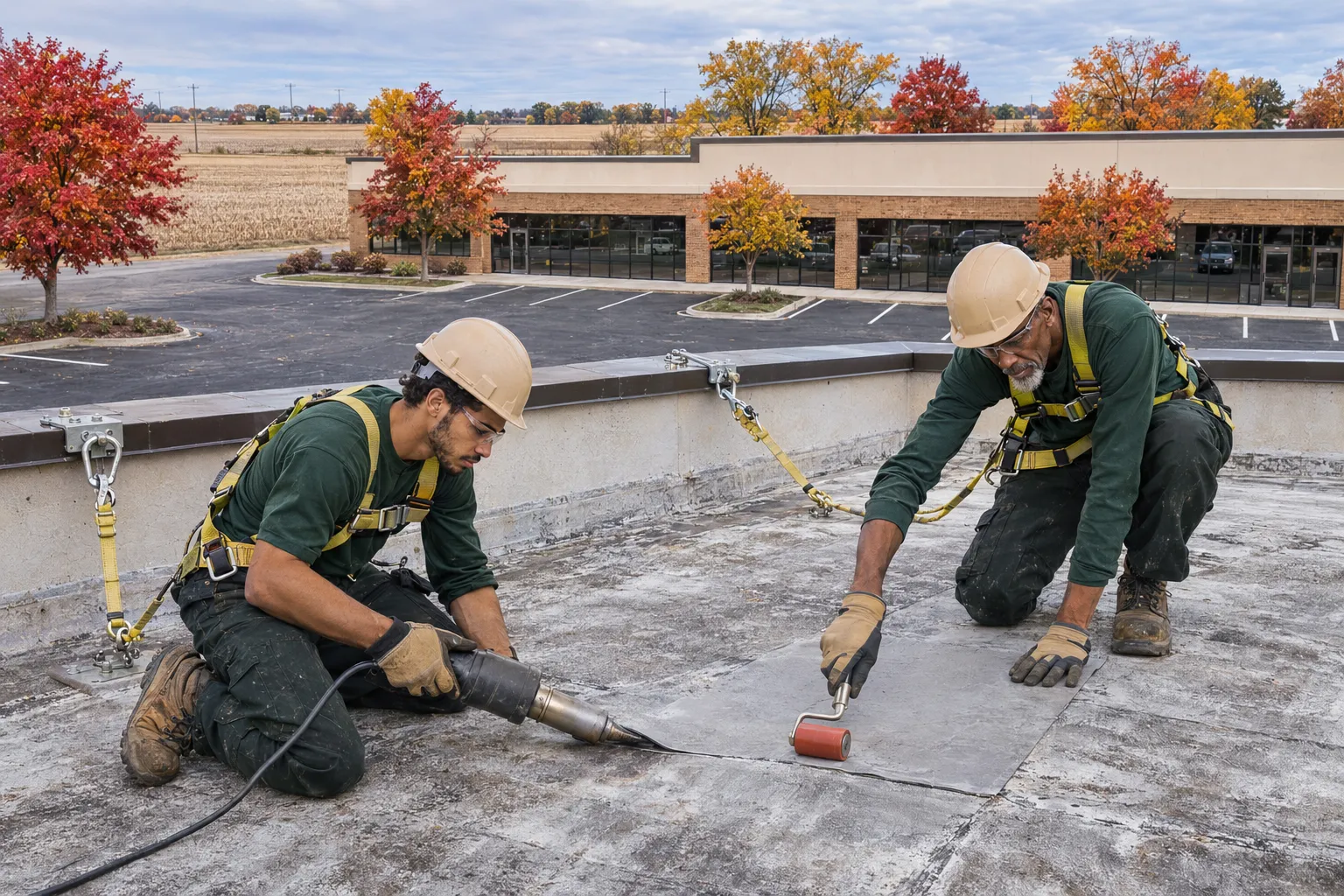
Coping joints open, mortar cracks, and base flashing slides down the brick until water runs inside the wall.
Service Area
Huntington commercial roof repair often means older buildings: brick parapets, layered roofs, and tight access off narrow streets and alleys.
Most Huntington commercial roof repair downtown comes back to the walls around the roof more than the field in the middle.
Shared walls, parapets with stone or metal coping, and roofs layered with decades of patches are common on older blocks. Water gets in at the wall long before the field membrane wears out. A roof can look tired in the middle and still hold, while one open coping joint floods an upstairs office.
Access shapes the plan. Ladders often go up from an alley or a neighboring roof, and material is staged in small loads so sidewalks stay open. Debris comes down in bags or covered chutes, away from the street edge.
Older blocks and the plants at the edge of town share these six trouble spots.
Coping joints open, mortar cracks, and base flashing slides down the brick until water runs inside the wall.
Stains show up on upper-floor ceilings or along a shared wall, often several feet from the real opening.
Years of mastic and cap sheet stacked on one area hold water between layers and hide the original leak.
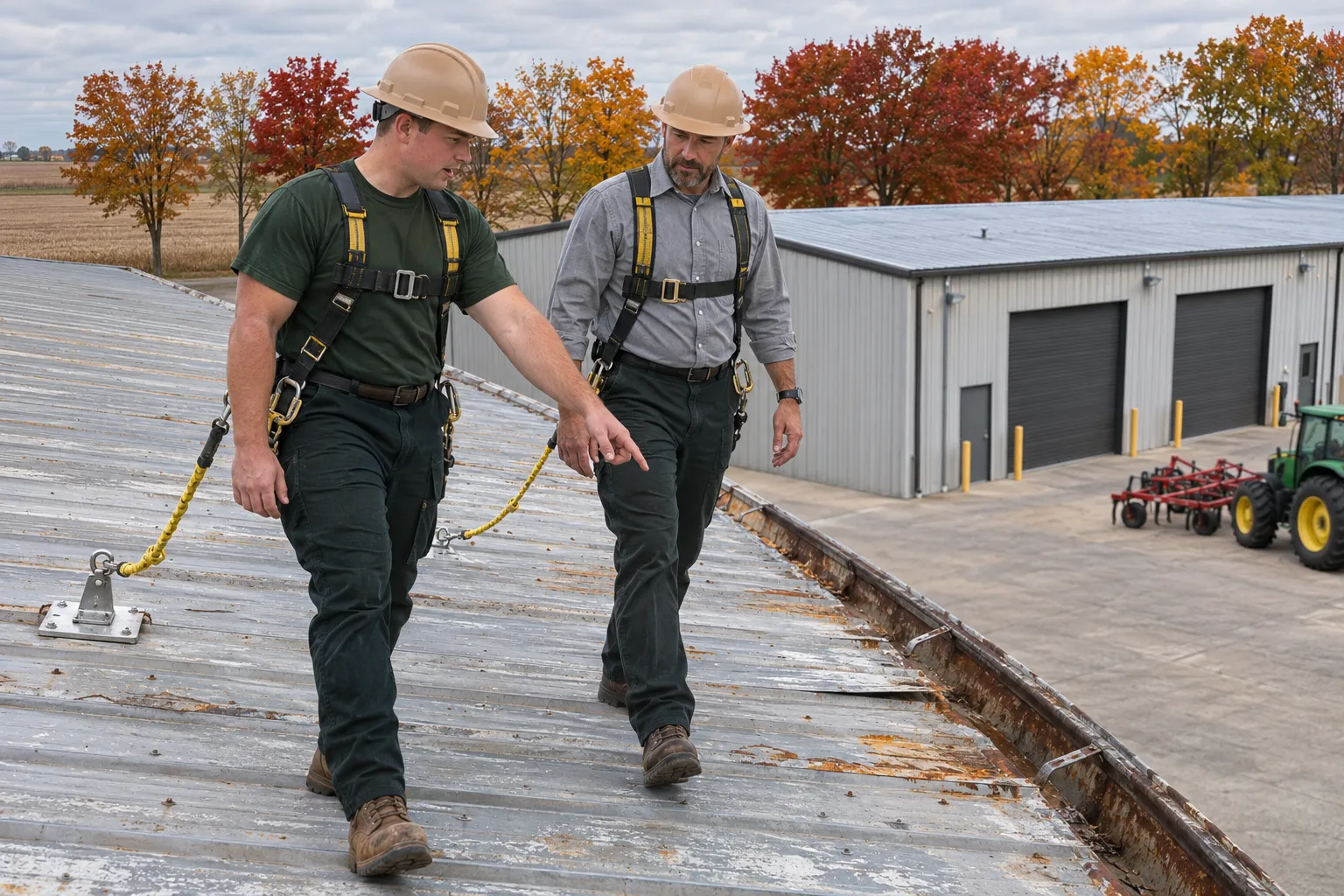
Plant roofs at the edge of town need curb, stack, and drain repairs scheduled around shifts.
Through-wall scuppers rust and their flashing cracks, so water runs into the wall instead of out of it.
Wood curbs under older skylights and hatches rot, and their flashing loosens with them.
On an older building, a good repair often means taking something off before putting anything back.
Before The Repair
After The Repair
Every service reaches Huntington. Here is how each one shows up on local roofs.
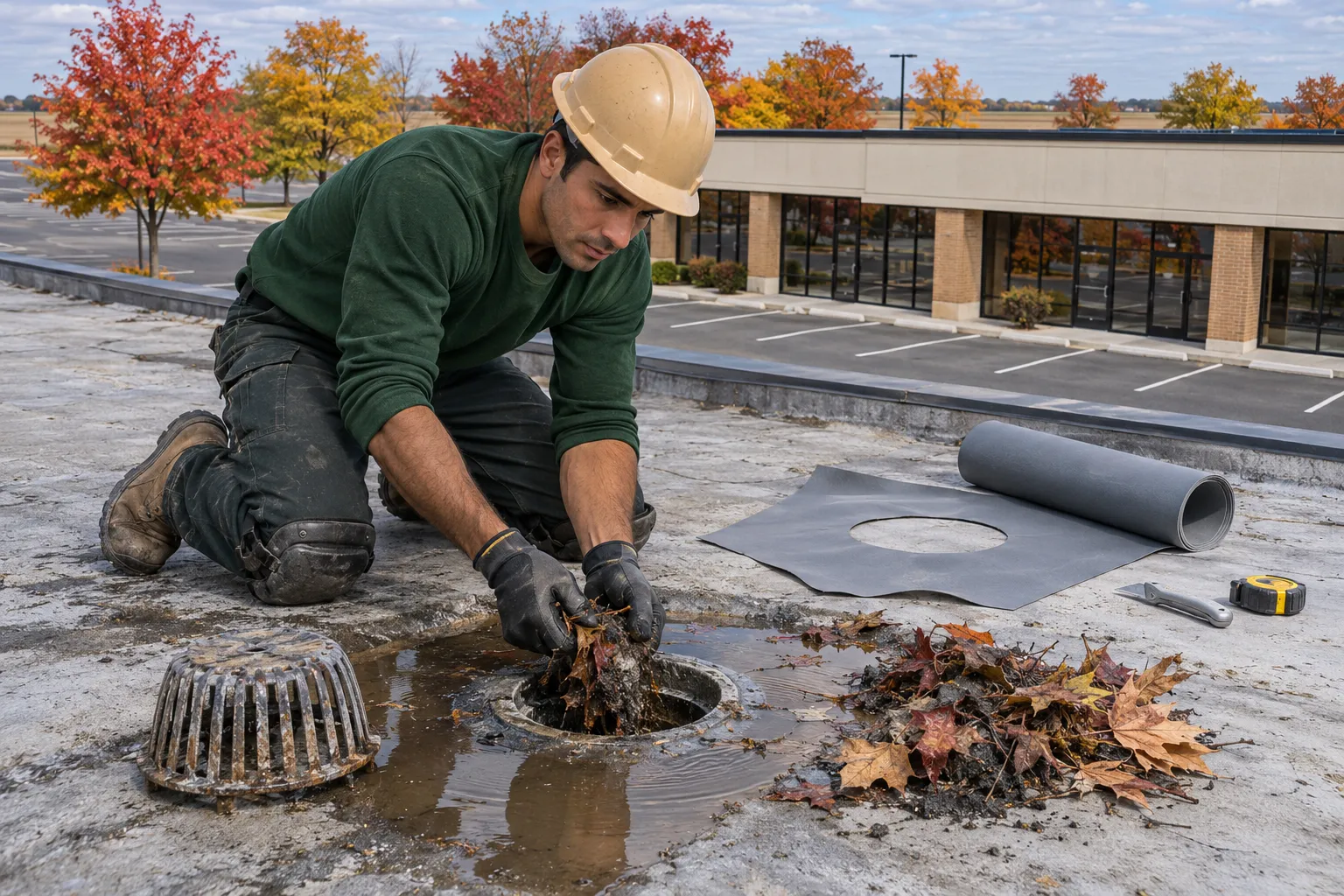
Drains, seams, and blisters on TPO, EPDM, and built-up roofs.
Flat Roof Repair details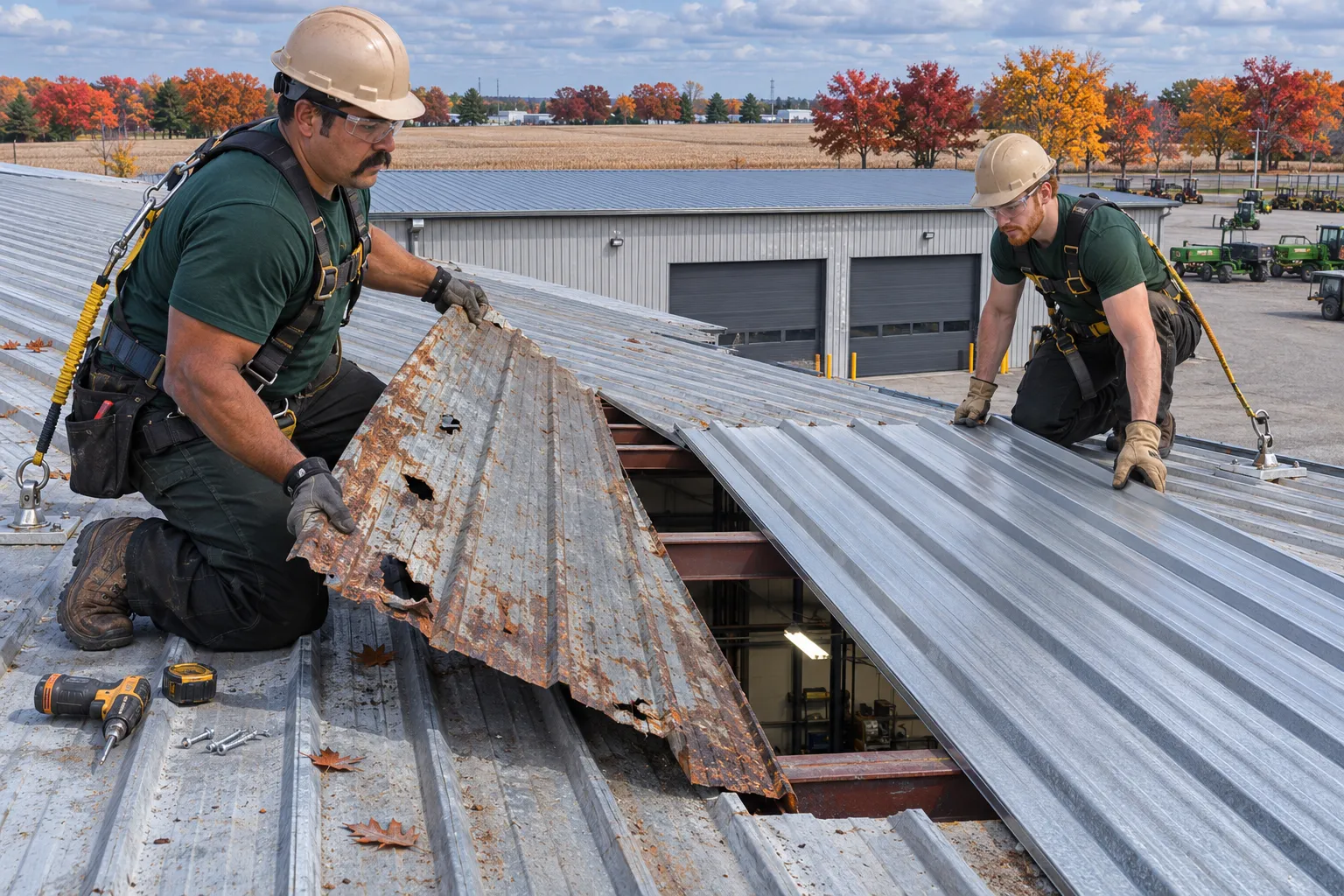
Loose fasteners, open laps, and rusted panels on metal buildings.
Commercial Metal Roof Repair details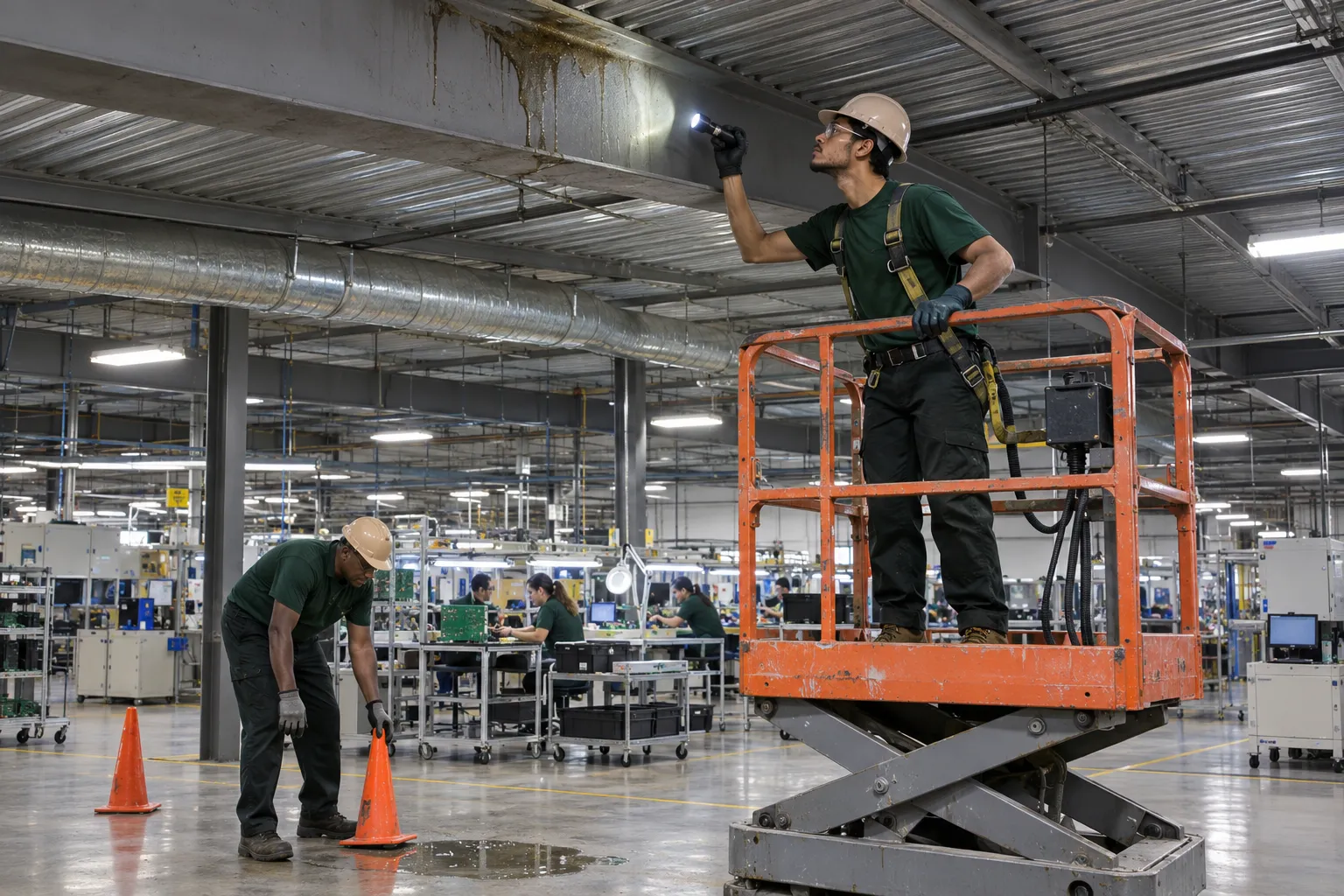
Ceiling stain traced back to the opening on the roof.
Commercial Roof Leak Repair details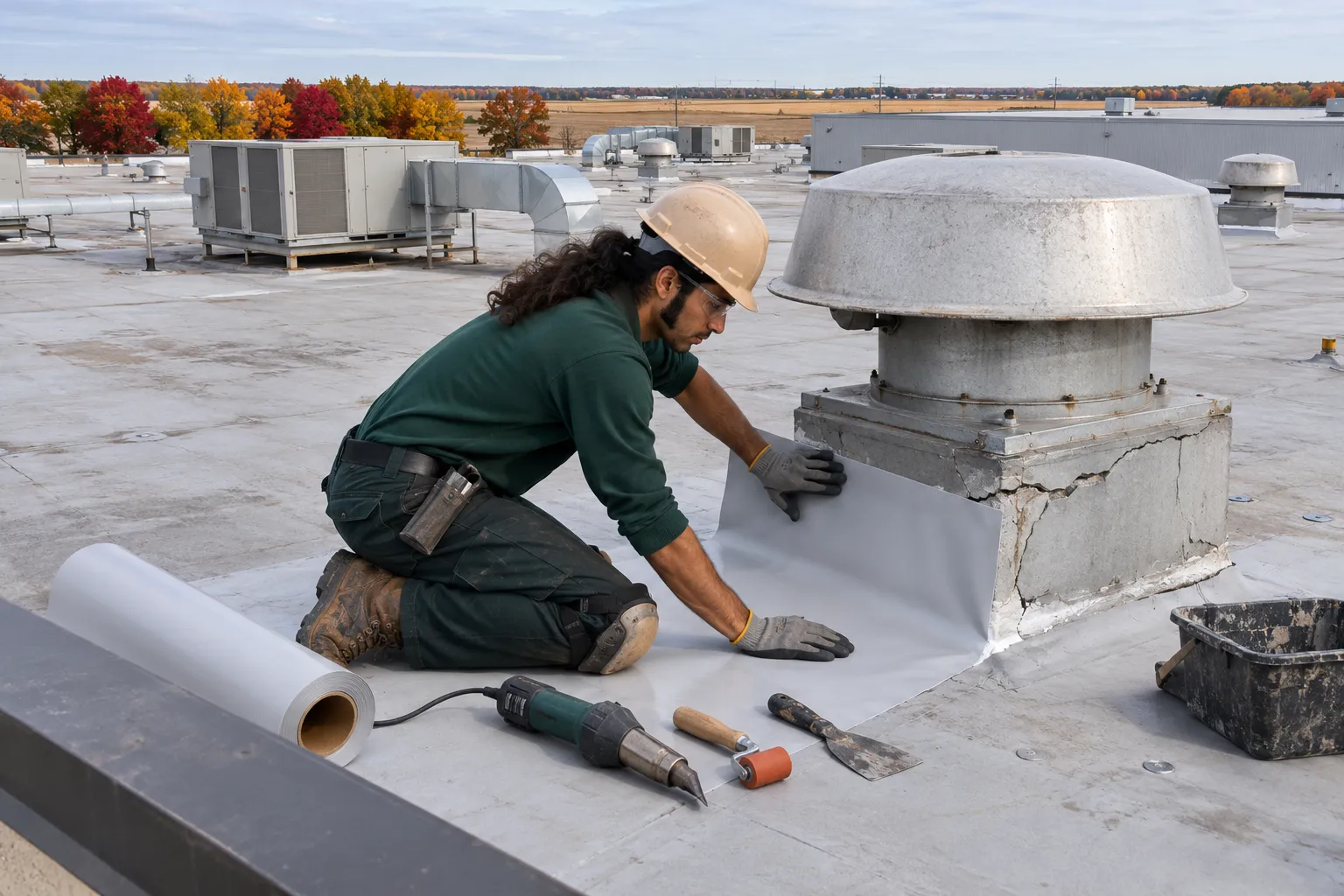
Stacks, curbs, and residue on roofs above production lines.
Industrial Roof Repair detailsThat usually points to the parapet. Call and describe where it shows, and we will plan the roof access.
Older roofs reward patience. These five steps keep the repair on the right layer.
Alley ladders, hatch keys, and any neighbor permission are arranged first, along with where small loads of material can sit without blocking the sidewalk. Neighbors sharing a wall are told when work reaches their side.
The walls get checked before the field: coping seams, mortar, and the top edge of the base flashing on each side of the roof.
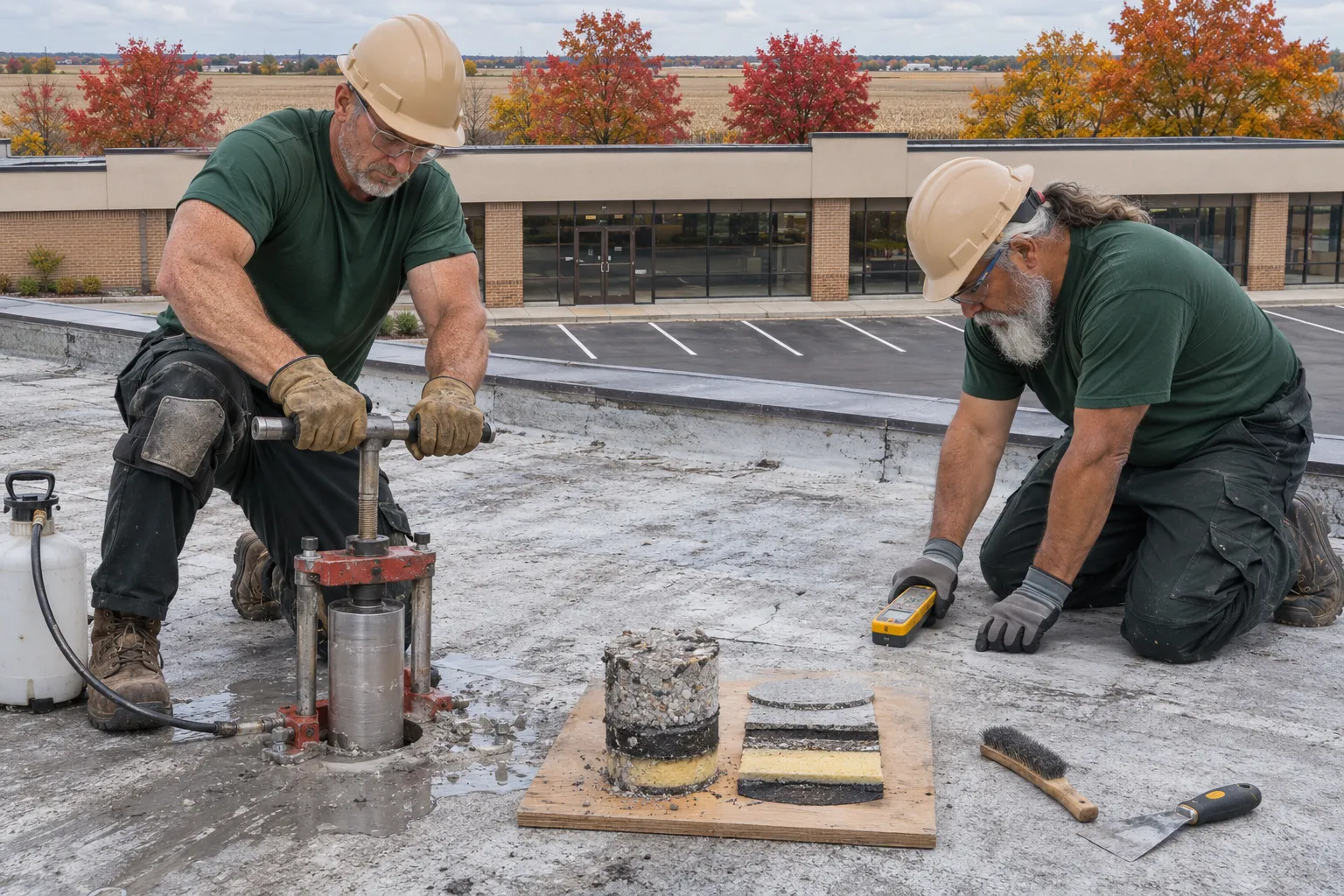
A test cut shows how many layers sit on the problem area and whether water is trapped between them. Wet layers come off.
Base flashing, counterflashing, and coping are rebuilt to shed water outward, and the field patch ties into the new wall flashing.
Close-up photos of each rebuilt coping joint and flashing termination go to you, so the next inspection starts from a record.
Older buildings, warehouses, and shops in these towns are where we repair roofs. Somewhere else? Call us or send us a message.
Metal shops, storage buildings, and farm-business roofs.
Huntertown commercial roof repair →We do, on flat, metal, and plant roofs across Huntington, from downtown storefronts to manufacturing buildings and warehouses. Each visit starts by tracing the water path and checking for wet insulation, then fixes the opening that caused the stain.
Parapets take weather on both faces and the top. Coping joints open, mortar cracks, and base flashing slides down the brick, so water enters the wall above the roof and appears inside below it.
On the area being repaired, yes, when they hold water. Wet layers trap moisture against the roof and hide the original opening. Dry, well-adhered layers can stay if the new patch bonds to them.
Usually, from an alley ladder or a neighboring roof with permission. We plan access before the visit and stage material in small loads so the street side stays clear.
Like any plant roof: curbs, stacks, drains, and skylights are checked bay by bay, and repairs are timed around shifts with the floor protected under any deck work.
Our part is the roof side: flashing, coping, and the parapet top where the wall rises above either roof. Coordination with the neighboring owner is needed when the wall serves both buildings.
Yes, with compatible plies. Built-up roofs take cold-applied or hot asphalt patches well when the area under them is dry. Wet sections are cut out first.
Small patches rarely need one. Replacing deck, insulation, or a large roof area is a different matter, and the local building department decides. We confirm with that office before larger repairs on older buildings begin.
Tell us whether the water shows on a ceiling or a wall. We will plan access and check the parapets first.