Drains
Roof Drain Repair On Warehouses
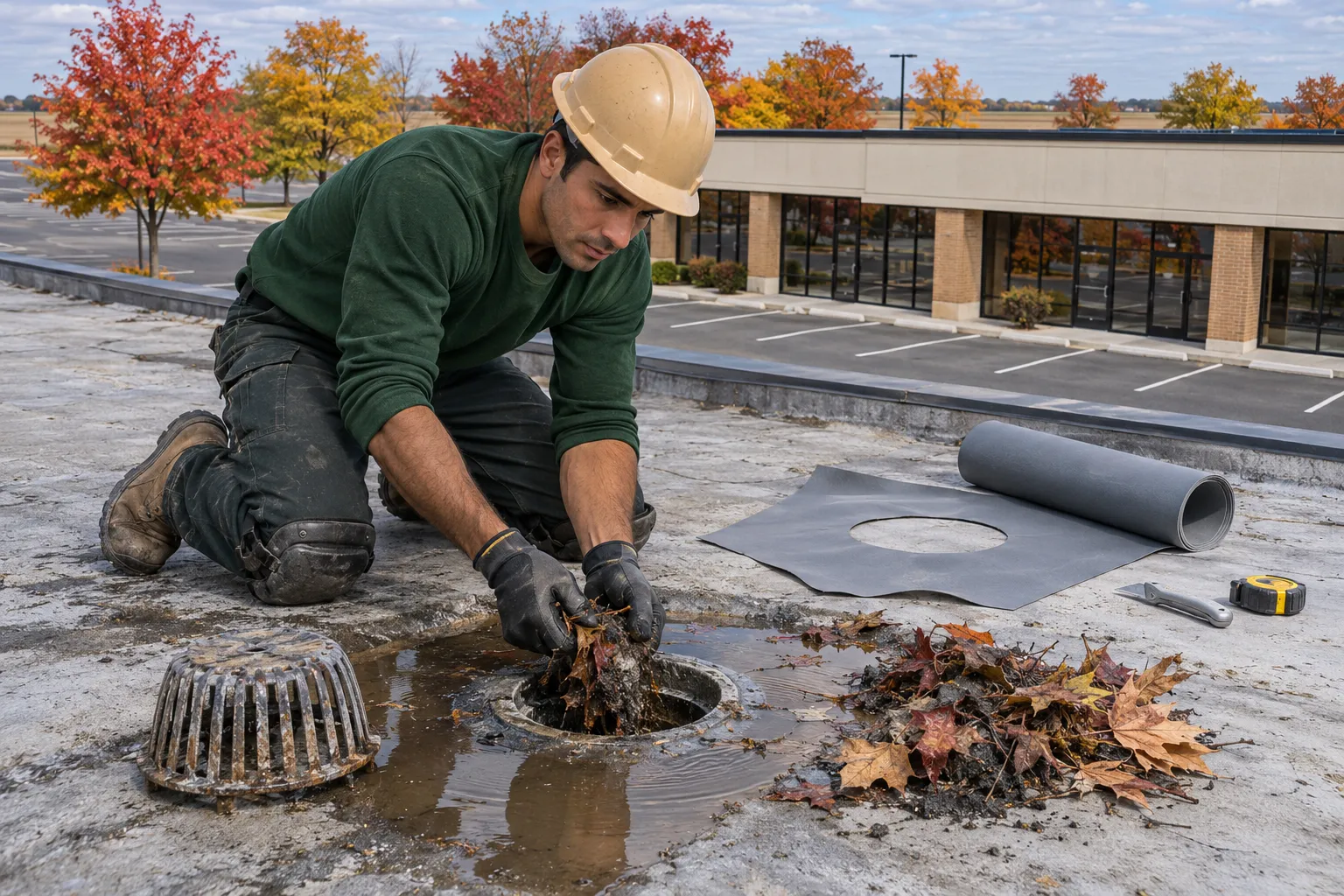
Pallet wrap, leaves, and grit clog strainers, and the drain flashing wears out under standing water. A cracked bowl gets replaced outright.
Service Area
New Haven commercial roof repair for warehouse roofs centers on drains, long seam runs, and the flashing where dock canopies meet the wall.
New Haven commercial roof repair on warehouses starts with drainage, because long roofs with few drains leak at the low spots.
Big single-ply roofs move a lot of water to a small number of drains. When one strainer clogs, water spreads, ponds, and works into the nearest seam or curb. On long roofs a single blocked drain can put an inch of water across a whole bay.
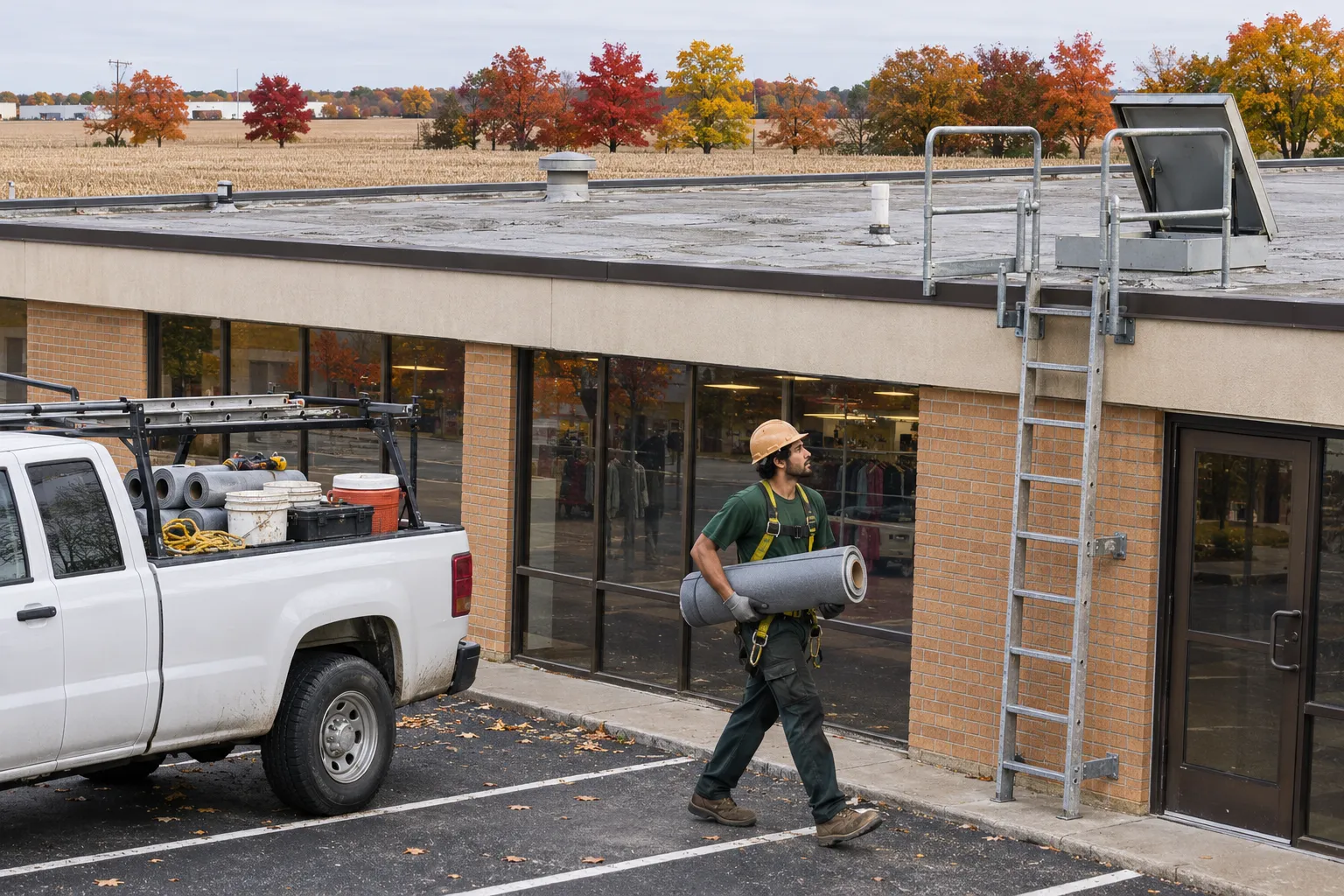
Dock canopies add a second weak point. Where the canopy meets the wall, flashing pulls loose and water runs into the building above the dock doors. Truck traffic below shakes the canopy, which speeds up the wear at that joint.
Warehouse roofs share a short list of leak points. These six account for most of what we find.
Pallet wrap, leaves, and grit clog strainers, and the drain flashing wears out under standing water. A cracked bowl gets replaced outright.
Canopies flex and shed water against the wall, so their flashing tears loose at the joint. New flashing at the joint is sealed to the wall and the canopy both.
Drips land on racking or product far from any penetration, because water runs along the deck first. Measuring from the columns tells us which bay to search.
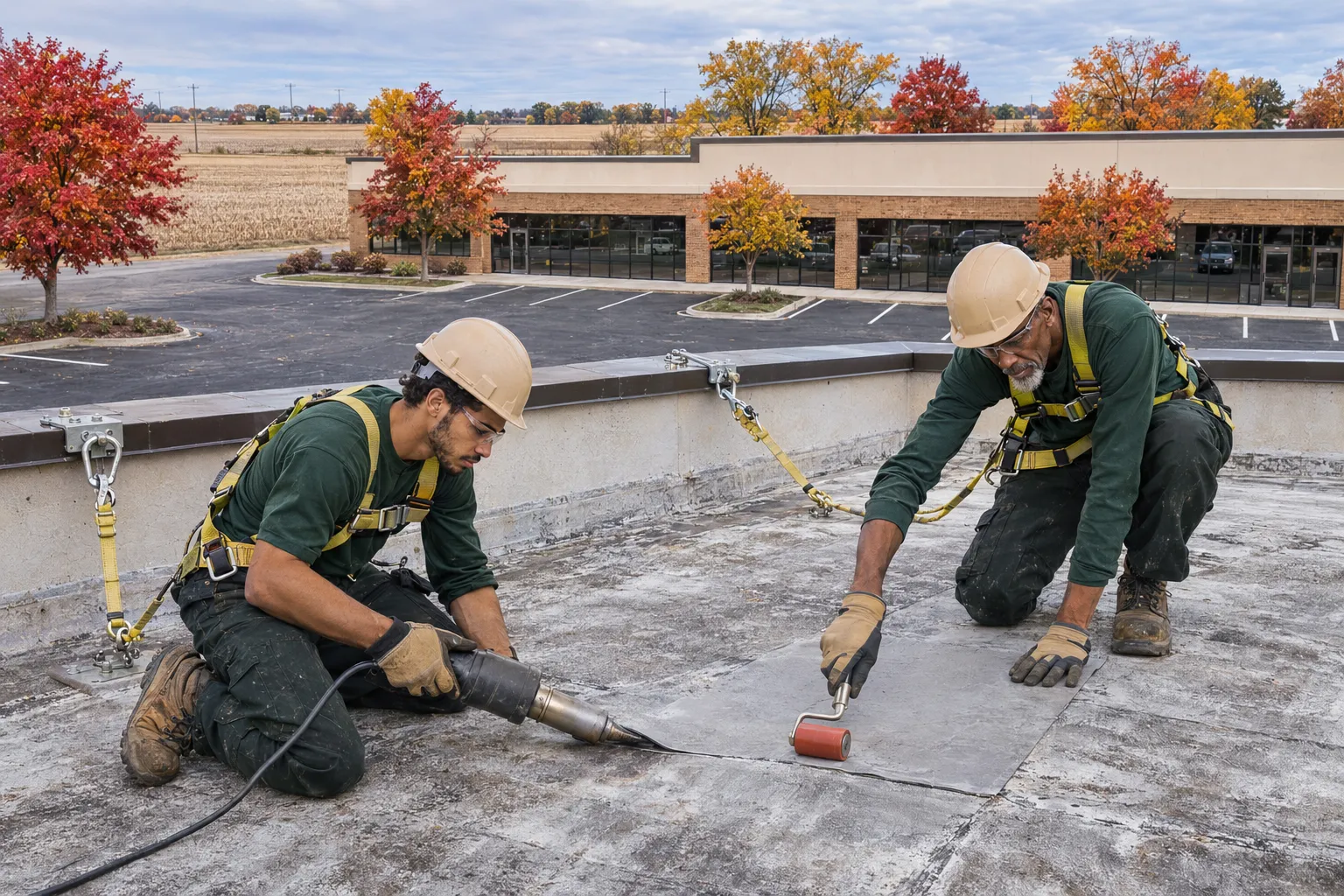
Service crews crossing the membrane to units puncture it and loosen nearby seams over time. Pads along their route stop the wear.
Hundreds of feet of seam give heat and cold many chances to open a lap. Probing every lap finds the loose ones before they leak.
Wind along long walls lifts edge strips that were fastened too far apart.
On a warehouse, a finished repair shows up as water leaving the roof the way it should.
Before The Repair
After The Repair
All four services reach New Haven. Warehouse owners use the first and third most.
Drains, seams, and blisters on TPO, EPDM, and built-up roofs.
Flat Roof Repair details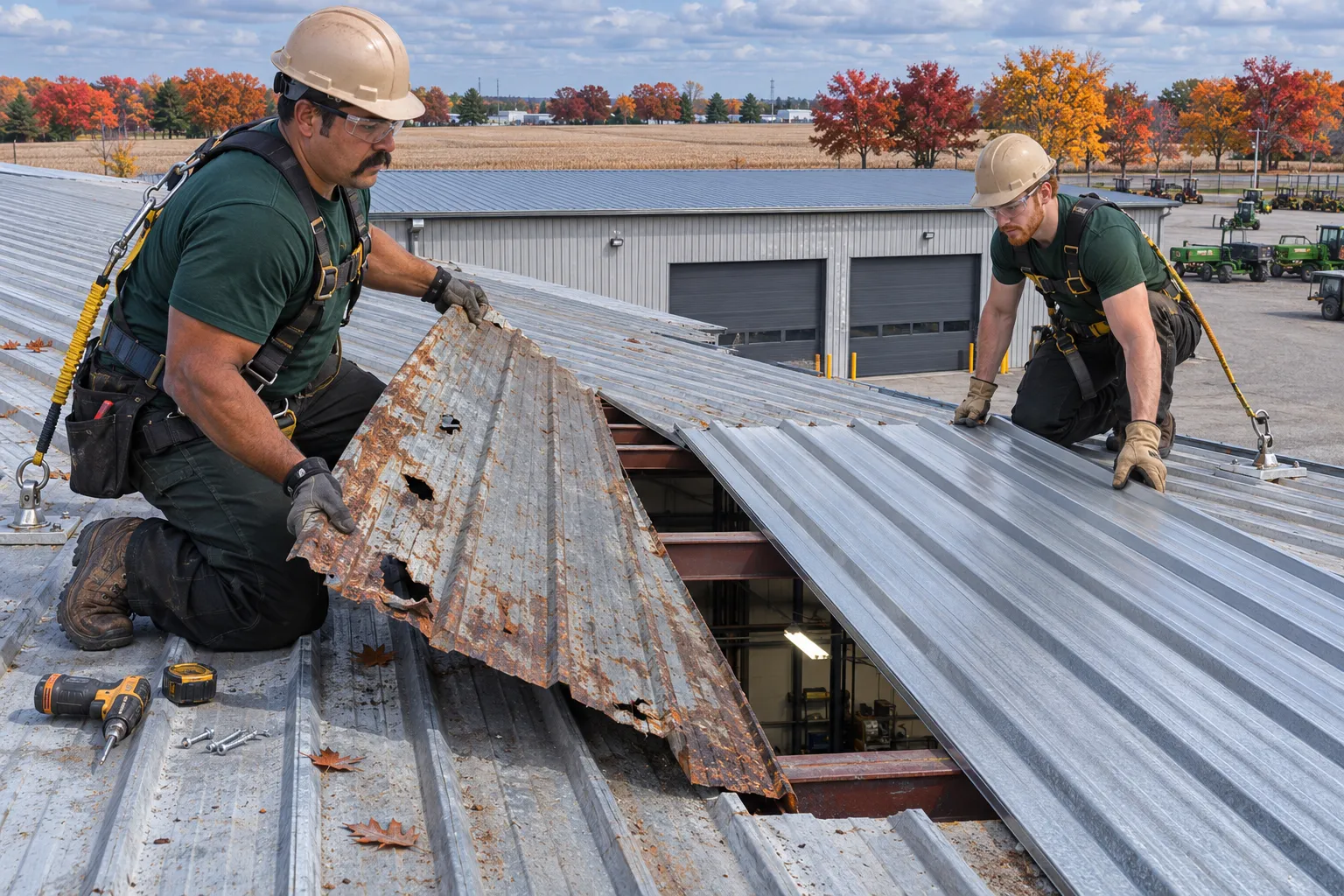
Loose fasteners, open laps, and rusted panels on metal buildings.
Commercial Metal Roof Repair details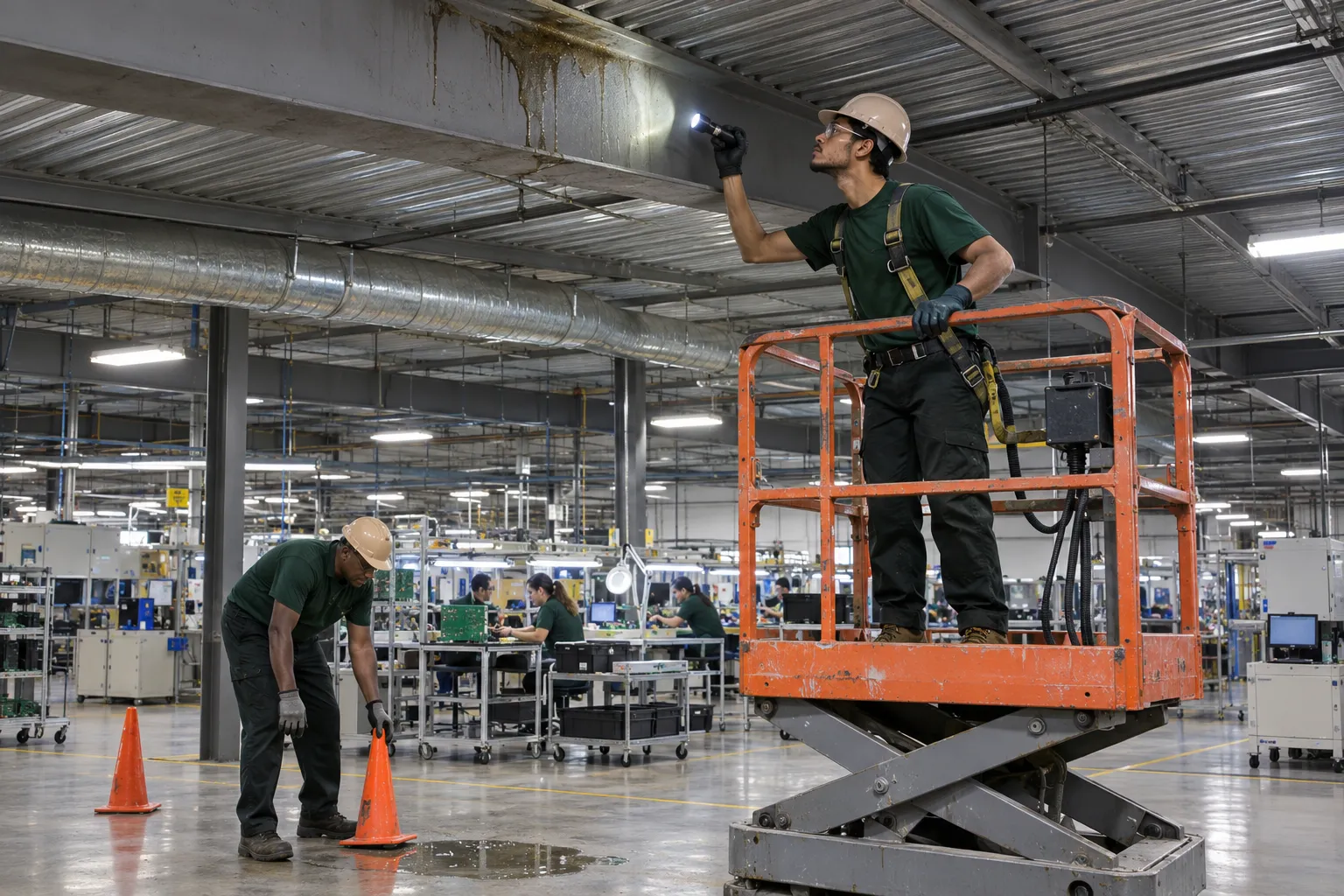
Ceiling stain traced back to the opening on the roof.
Commercial Roof Leak Repair details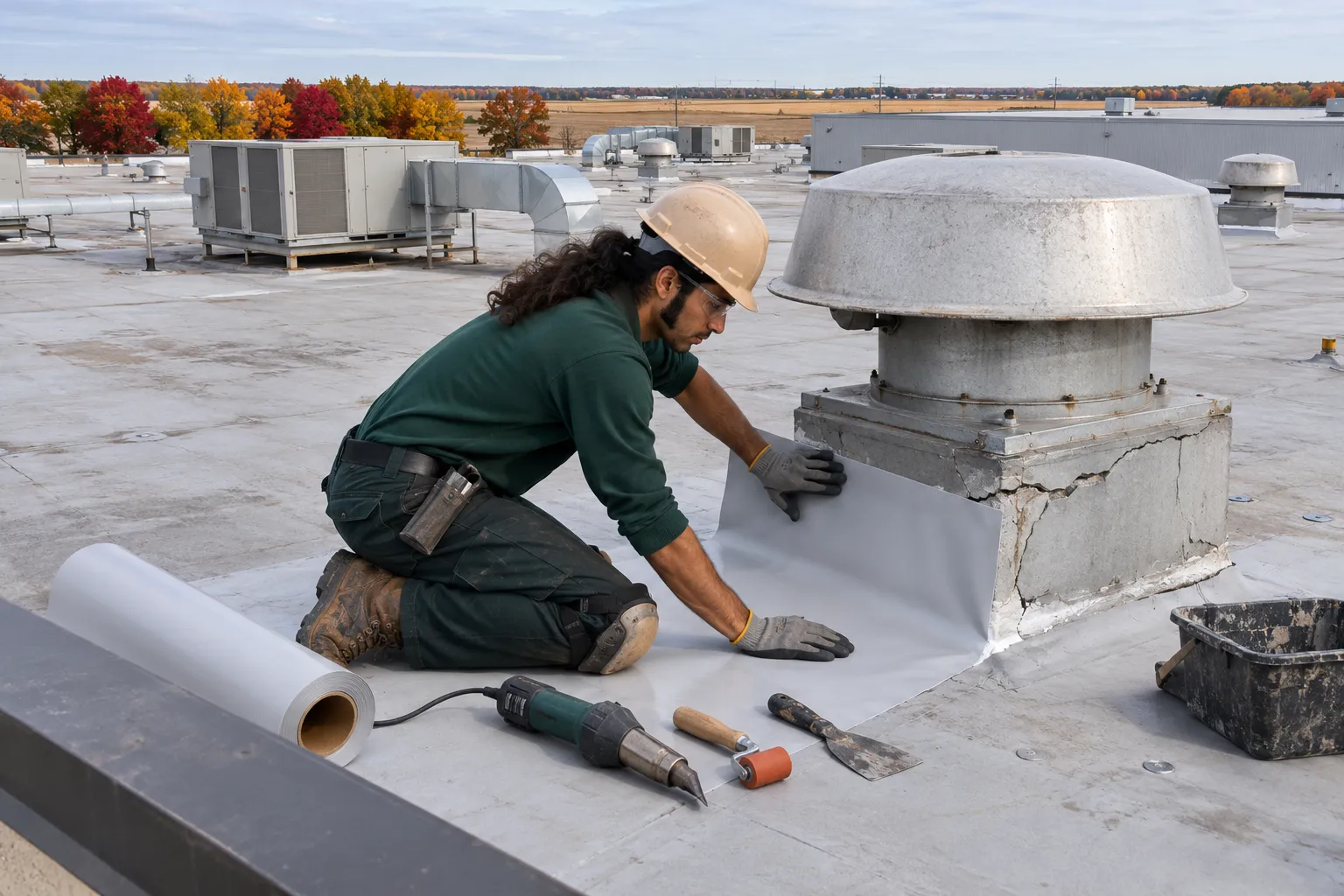
Stacks, curbs, and residue on roofs above production lines.
Industrial Roof Repair detailsCall with the aisle and the bay. We will trace the water along the deck to the opening on the roof.
Warehouse repairs follow the water. These five steps work from the drains outward.
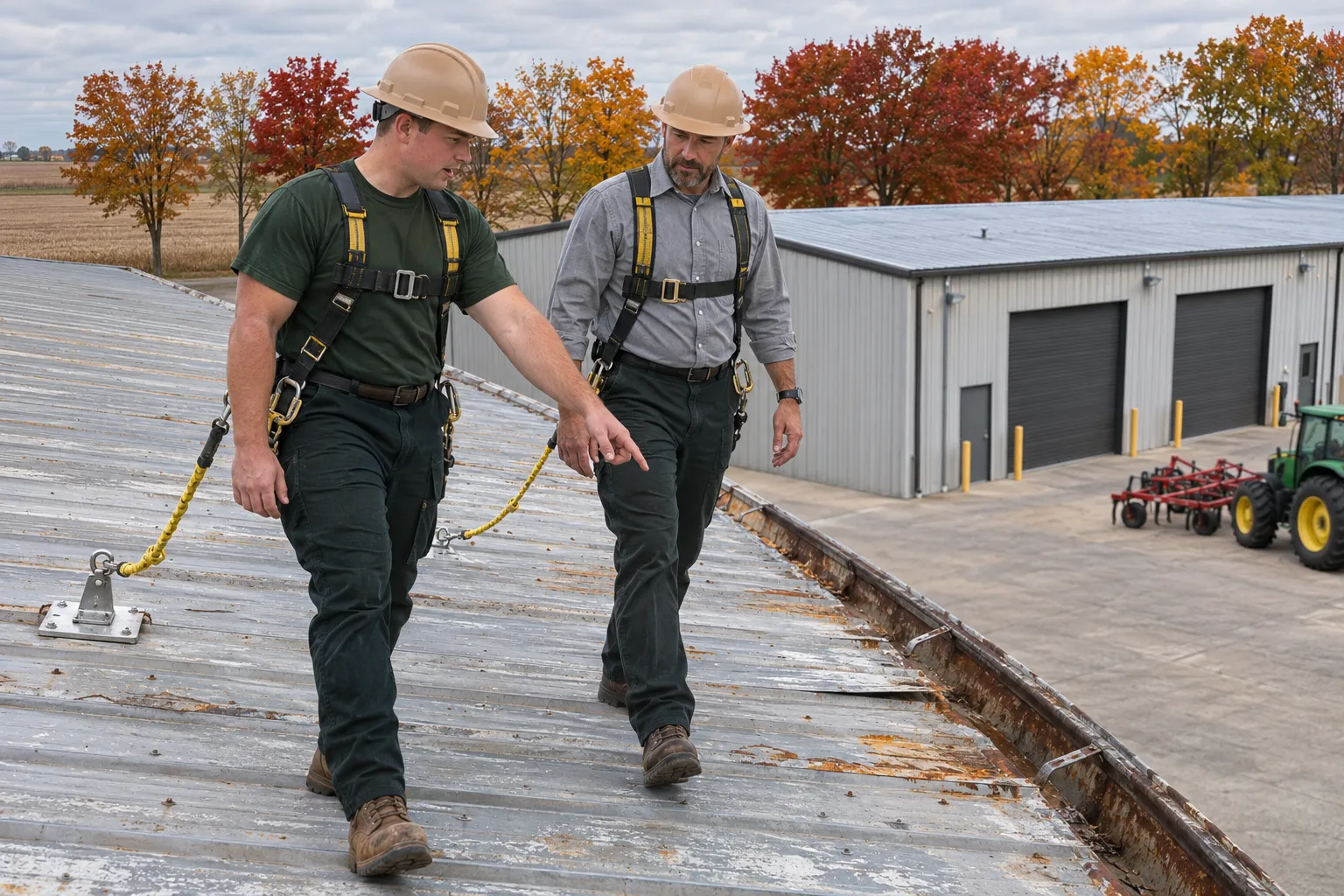
Strainers come off and each drain is cleared and checked for a loose clamping ring or cracked bowl before anything else. Missing strainers are replaced so debris stays out of the leader pipe.
Low spots get marked after rain or by their dirt rings, which tells us where insulation will need building up.
Drips over racking are measured from columns and matched to seams, curbs, or canopy joints on the roof above. Water often runs along the deck flutes for a full bay before it drops.
Seams, curbs, and canopy flashing are repaired, then drains and low spots are corrected so the same leaks stay closed.
We note each drain location and condition on a simple sketch, so your staff can check the same strainers after storms.
Shops, plants, and storefronts in these towns get the same drain-first repairs. Outside them? Call us or send us a message.
Older downtown blocks, brick parapets, and plant roofs.
Huntington commercial roof repair →Metal shops, storage buildings, and farm-business roofs.
Huntertown commercial roof repair →We can, and warehouse leaks in New Haven usually trace to drains, seams, dock canopy flashing, or rooftop units. We follow the leak, cut out wet material, and repair with material matching the roof. When several leaks share one cause, such as poor drainage, that gets fixed as well.
Long spans deflect slightly between supports, and insulation compresses near drains over the years. A clogged strainer makes it worse. Tapered insulation around the drain and a clear strainer move the water off.
Canopy flashing is the usual source. Canopies move in wind and shed water against the wall, so the joint opens. We reflash the joint and seal it to the wall.
Yes. Roof work rarely needs the docks closed, and any work over a dock is timed with your schedule so trucks and staff below stay clear.
Where service crews walk to units every month, pads protect the membrane from punctures and seam wear. We place them along the routes the crews already use.
At least twice a year, in late spring and after leaves fall, plus after big storms. Pallet wrap and debris from rooftop work clog strainers quickly on busy buildings.
It happens often after additions. Each section is repaired with its own material, and the joints between sections get extra attention.
In most cases. The leak is traced from above, and only the racking directly under any deck work needs covering or clearing. We mark that area ahead of time so your staff can plan around it.
Tell us which bay drips and when. We will start at the drains and follow the water.